You know that old Joni Mitchell song: “They paved paradise and put up a parking lot.” Well, Michelle Vassel of the Wiyot Tribe recently flipped the script in a way that got my blood pumping. She said, “We want to take a parking lot and make it paradise.” And let me tell you, I’m all in on this vision.
Let’s just stop for a second and look around. Everywhere you go, asphalt. Blacktop. Concrete. Acres and acres of parking lots sitting empty most of the time, baking in the sun, flooding during the rains, contributing to urban heat islands, and—the wild part?—not serving a damn purpose half the time. Did you know that in the U.S., there are somewhere between three to eight parking spaces per car? Not cars, folks. Parking spaces. We’ve given more land to parking lots than we’ve given to farms. Let that sink in.
So here’s my question: Why the hell are we okay with this? Why are we more comfortable with lifeless asphalt under our feet than fertile soil or green grass? And more importantly—what would it look like if we took that land back?
Turning Blacktop Back into Paradise
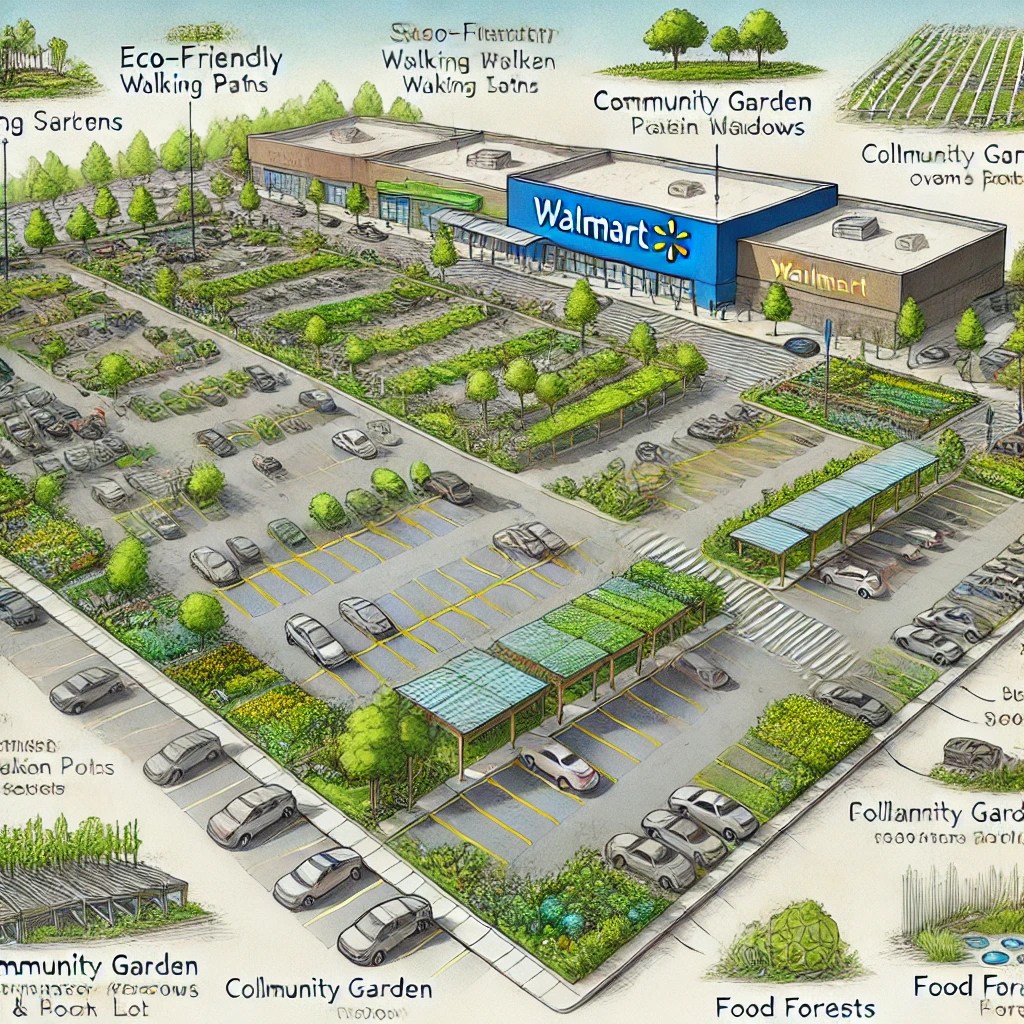
Imagine this: instead of strip malls surrounded by barren seas of blacktop, we start adding life back into them. Walking paths and rain gardens could wind between the rows of parked cars, turning a scorching, lifeless space into something vibrant and inviting. Shaded paths with vegetative roofs could extend over the parking spots themselves, cooling the area and reducing heat islands. Rain and snow runoff could be captured in filtration systems, replenishing the water table beneath the asphalt and irrigating the plants. It’s a slow shift, sure, but one that brings Nature back into spaces we’ve erased it from. And from there, why stop? Why not replace more and more of that dead blacktop with food forests, pollinator meadows, and community gardens where people can reconnect with the land, learn to grow their own food, and maybe even breathe in some damn fresh air for once? What if instead of parking cars, we were parking possibilities? Possibilities for a healthier planet, stronger communities, and a better future.
But Traci, Where Will People Park?
Oh, please. That’s the argument? We’ve prioritized cars for so long, it’s warped our brains. Here’s the truth: we don’t need more parking; we need better systems. Walkable neighborhoods. Reliable public transit. Cities designed for people, not vehicles. Parking lots are a lazy solution to a problem we created. And we’ve let them choke out the life that used to thrive under all that asphalt.
It’s time to face facts. Parking lots are the ultimate symbol of everything wrong with how we’ve treated the land. They’re a perfect metaphor for how we’ve paved over something vibrant and alive, replaced it with something dead and barren, and called it “progress.” Enough is enough.
From Concrete Deserts to Living Landscapes
Here on the farm, every square foot of land is precious. The soil is alive—it feeds us, nourishes us, and reminds us that we’re part of something bigger than ourselves. When I think about the parking lots in every city I’ve ever visited, I see wasted potential. What could we be doing with all that land?
Let’s talk carbon sequestration for a second. If we replaced just a fraction of our parking lots with green spaces, we could pull untold amounts of carbon out of the atmosphere. And it’s not just about carbon. Plants cool the air, clean the water, and provide habitat for wildlife. Imagine every Walmart parking lot turned into a permaculture paradise, complete with fruit trees, wildflowers, and composting stations. The land could heal.
From Concrete Deserts to Living Landscapes
Here on the farm, the impact of too much direct sunlight is painfully clear. This past summer, after a storm wiped out most of our shade trees, the farmyard was left exposed to relentless heat and light. By the end of the season, the grass was fried, the ground was scorched, and the topsoil was likely damaged, if not entirely dead. That’s what happens when land is stripped of its natural cover and exposed to harsh conditions—whether it’s asphalt in a parking lot or bare soil on a farm.
Now imagine that on the scale of a city. Parking lots, with their vast expanses of heat-absorbing asphalt, make urban areas hotter. They create “heat islands” that raise temperatures by several degrees compared to surrounding rural areas. But here’s the thing—reclaiming these spaces isn’t just good for the planet; it’s good for our wallets, too.
Think about it: Green spaces cool the surrounding air naturally, reducing the need for energy-intensive air conditioning. Less heat means lower cooling costs in urban areas. Rain gardens and permeable surfaces can help manage stormwater, preventing flooding and reducing the strain on municipal drainage systems. Plants and soil also filter pollutants from rainwater, improving the quality of water that recharges local aquifers.
And let’s not forget the small but tangible perks. Imagine coming out of a store to a shaded parking spot instead of a sunbaked car that feels like an oven. Less direct sunlight on vehicles means less wear and tear from heat damage, which can save money on maintenance in the long run.
Sure, converting parking lots into green spaces might require an upfront investment, but the long-term savings—on energy, water management, and even public health—are undeniable. Not to mention the priceless benefits of cleaner air, cooler cities, and a stronger connection to the natural world.
The Time for Action Is Now
Look, I know this idea might seem radical. But here’s the thing: radical is exactly what we need. We’re running out of time to fix what we’ve broken. Every year, we lose more farmland to development. Every year, our cities get hotter, our waters more polluted, and our connection to the Earth weaker. Reclaiming parking lots is just one step—but it’s a step that matters.
And before you roll your eyes and tell me it’s unrealistic, let me ask you this: What’s more unrealistic? Continuing to live like this, destroying the planet one parking lot at a time? Or taking bold steps to create a world where our kids don’t have to live on an overheated, resource-depleted husk of a planet?
Michelle Vassel’s vision is simple: Take the parking lot and make it paradise. So, what’s stopping us? Imagine if every town reclaimed just one parking lot. What if cities worked with local farms to build urban gardens? What if corporations stopped putting profits over people and invested in green infrastructure? What if we started treating the Earth like the sacred, life-giving force it is, instead of a bottomless pit of resources to exploit?
Let’s Get Real
We don’t need another parking lot. We don’t need another strip mall. We need life. We need soil, trees, and spaces that remind us what it means to be human. It’s time to stop paving paradise and start taking it back.
So, are you with me? Are you ready to dig up some asphalt and plant some seeds? Let’s reclaim the land, one parking lot at a time. Paradise is waiting—it’s just buried under a few inches of concrete.
Until next time,
Traci
Hungry for More?
If you’ve been enjoying our Farm Table Talk articles, why not bring a little farm-to-table magic into your own kitchen? Check out our digital cookbook—packed with simple, seasonal recipes straight from our farm to yours. Whether you’re looking for hearty meals, quick snacks, or creative ways to use fresh, local ingredients, we’ve got you covered. Plus, every purchase supports our mission to nurture the land, care for our animals, and keep sharing the real stories behind farm life.

You should watch this video
Parking Laws Are Strangling America | Climate Town
LikeLike
Thank you so much for sharing that video! I watched it, and wow—while the guy is absolutely hilarious, he also packed in some incredible information about the history and legalities of parking lots. I had no idea “parking minimums” were a thing! It’s mind-blowing how these requirements have shaped our cities (and not in a good way) by forcing so much land into dead space instead of something vibrant and useful.
That said, I absolutely stick by the ideas we proposed in our article (https://huckleberryfarms.farm/2024/12/14/farm-table-talk-pave-paradise-then-take-it-back). Turning parking lots into food forests, pollinator meadows, or community gardens is still one of the best ways we can reclaim these spaces for good. However, the video did spark some additional ideas—like advocating for policies that reduce or eliminate parking minimums in favor of more flexible, creative land use. Can you imagine if towns started seeing parking as a shared resource instead of a sprawling wasteland of blacktop?
I also loved how the video made the connection between parking lots and urban heat islands, which ties back perfectly to what we discussed in the article. These spaces are *literally* making our cities hotter and more unpleasant to live in. Every step toward reclaiming them—whether it’s adding rain gardens or tearing up the asphalt altogether—is a step toward creating healthier, more sustainable communities.
So, thank you again for pointing us to that video—it’s definitely added fuel to my fire for pushing this conversation further. If you have more suggestions or resources, I’m all ears!
LikeLike