
Our favorite chick is a little different.
It is independent. It is defiant. It is a survivor.
Like us.
Which is probably why we love it so much.
We don’t know if it is a boy or girl. We haven’t named the poor creature. But it is the first one that we seek out every time we go outside. It is our little escape artist. Gets out of every pen we put it in. Goes up against the ducks by itself with it’s fighter spirit.
And this one has fighter spirit in spades. Because it literally fights for it’s life every day. This little one suffers from something called cross beak.
Cross beak, also known as scissor beak or crossed beak, is a condition found in chickens where the upper beak and lower beak are not correctly aligned and they overlap each other. This malformation prohibits the bird from closing its mouth properly, which makes it difficult for the bird to eat and drink.[1]
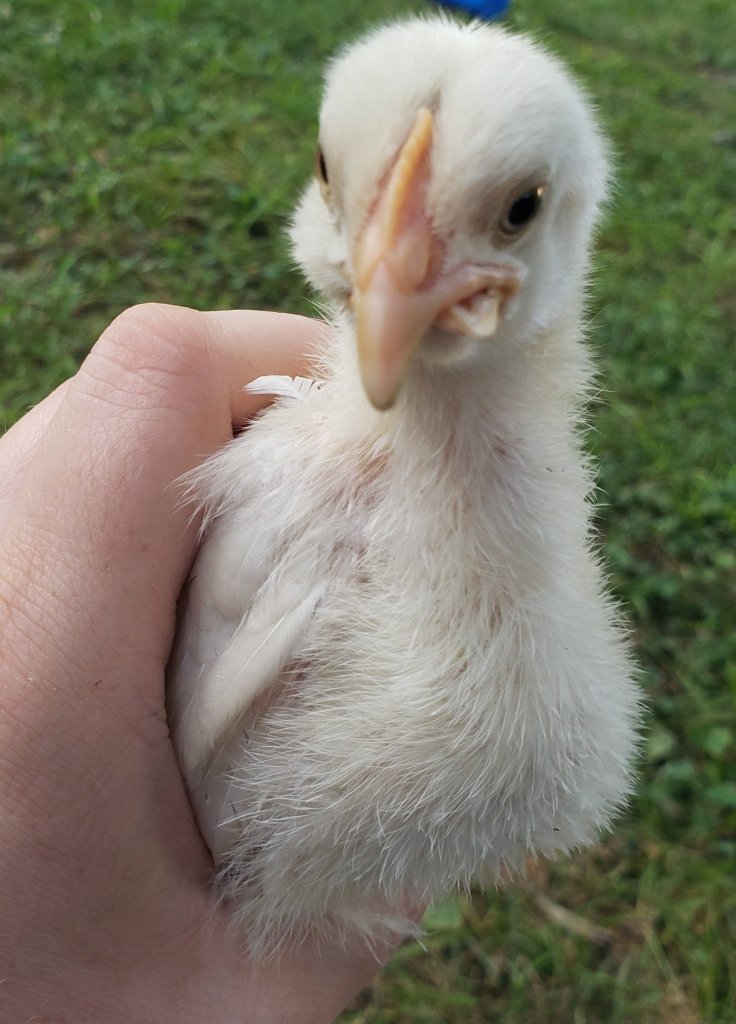
Cross beak can be evident at hatch or develop later on as the chick matures. It is difficult to know the exact cause, but generally when a crossed beak is evident at hatch the cause is suspected to be a possible genetic issue, a malposition of the chick inside of the hatching egg, or improper incubation conditions. [1]
Our little one developed cross beak about 1.5 to 2 weeks old. Generally, chickens with this condition don’t have such an extreme case (in my experience) and usually do alright even though they have to do things a little differently than most chickens.
Because their beak does not come together correctly, they are unable to peck like normal chickens. This is both a good thing and a bad thing. Let’s look at the bad reasons first.
The misalignment of the beak causes the animal to not be able to pick up food like the other chickens. This can lead to malnurishment, poor body condition, and smaller sized birds.
However, the birds often learn to use their lower beak as a “scoop” and after some adjustment are often able to live a fairly normal life. They need routine beak trimming, as they aren’t able to maintain it themselves without pecking, but otherwise don’t generally require interference as long they are able to eat effectively.
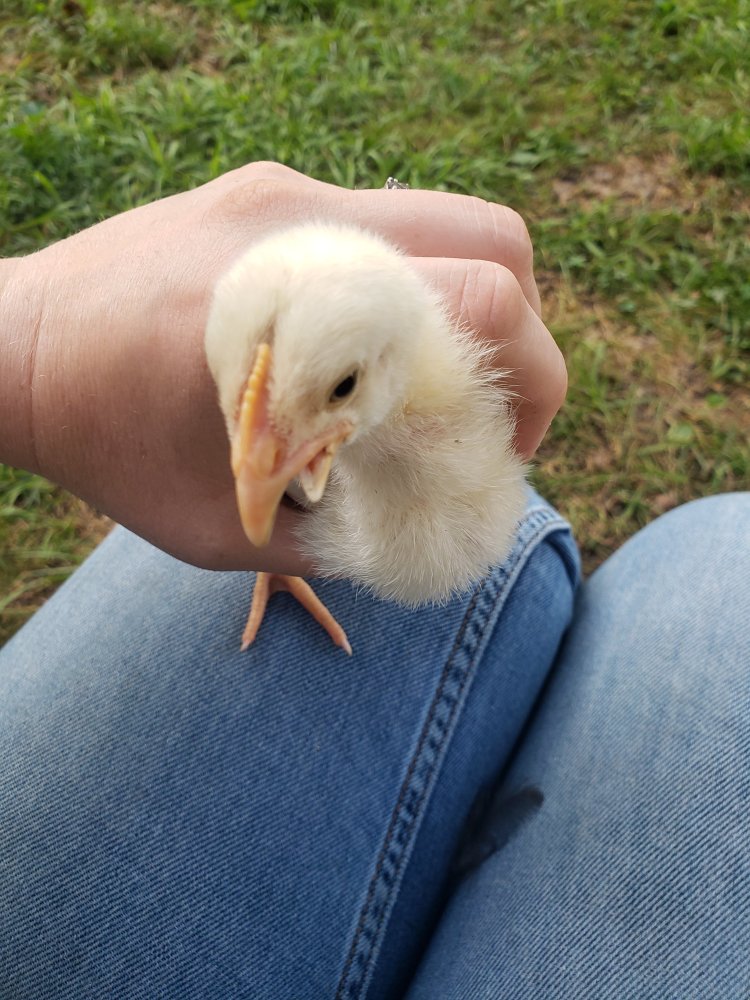
One of the good things about a cross beak chicken is that they can’t peck. As in, they can’t peck at injured chickens or those who have lost feathers like a normal chicken would. That makes a cross beak chicken a perfect emotional support chicken for those in the chicken hospital! [2]
I do NOT condone breeding for this condition. But if you happen to have a cross beak chicken, then you have a very special bird indeed.
Our little one happens to be one of our Cornish Cross meat birds. Typically, this breed of bird does not do well past 12 weeks old. They are known for developing too quickly, making walking impossible. I have recently seen a few folks raise their CC as pets. (One I saw on Facebook was 6 months old and doing great!)
At this time, I do not believe that we will be keeping this chick as a pet. The feral kids have gotten pretty attached to it, though, so we may keep it. At least for a little while. It is smaller than our other CC, but it is thriving and doing really well. It is our daily reminder to keep fighting even when things get hard.
References
- Cross Beak: Causes and Management; Meyer Hatchery
- CROSSBEAK CHICKENS ARE HIGHLY VALUABLE. HERE’S WHY.; Oak Abode
If you haven’t already, be sure to check out our NEW Facebook Page Huckleberry Farms! Get daily posts about the goings on at the farm, funny memes, and information bites that can help you with your homestead journey!
- 🐇 March: “Lilith’s Spring Fever Forecast”
- 🧠 The Mental Load of Winter Heat: What Woodburning Actually Requires
- 🦆 February: “Silver Boy’s Slush Report”
- 🌎 Climate Balance: Why Strong Winters Are Part of Healthy Seasonal Cycles
- 🌙 Cultural Rhythm: How Winter Slows Us Down, Making Space for Storytelling, Creativity, and Gratitude
- 🪶 January: “Lucy’s Cold Case”
