
In the world of rabbit genetics, most coat colors come from a mix of dominant and recessive genes working together to create rich, varied patterns. But the albino gene (c/c) operates differently—instead of influencing color, it erases it entirely. Rabbits carrying two copies of the albino gene (cc) are completely white with red eyes, regardless of whatever other color or pattern genes might be hiding in their genetic makeup.
This makes c/c one of the most powerful genetic factors in rabbit color inheritance. It overrides everything, acting like a “mask” that prevents any visible color expression. Whether a rabbit should have been black, chocolate, agouti, or broken patterned, if it has c/c, it will be white.
Let’s break down how the albino gene works, how it affects breeding outcomes, and what you need to know when working with albino rabbits.
What Does the Albino Gene (c/c) Do?
The C locus in rabbit genetics controls pigment production. This gene determines whether melanin is fully expressed, diluted, or absent altogether. While other versions of the C gene allow color to show in various forms, the recessive albino (c) version completely eliminates all pigment, resulting in a pure white rabbit with pink/red eyes.
Unlike the En/en gene, where pattern is immediately visible, the albino gene hides everything. If a rabbit inherits two copies of albino (c/c), it won’t show any of its other color genes—it will appear white, even if its genetic background carries black, chocolate, dilute, or agouti traits.
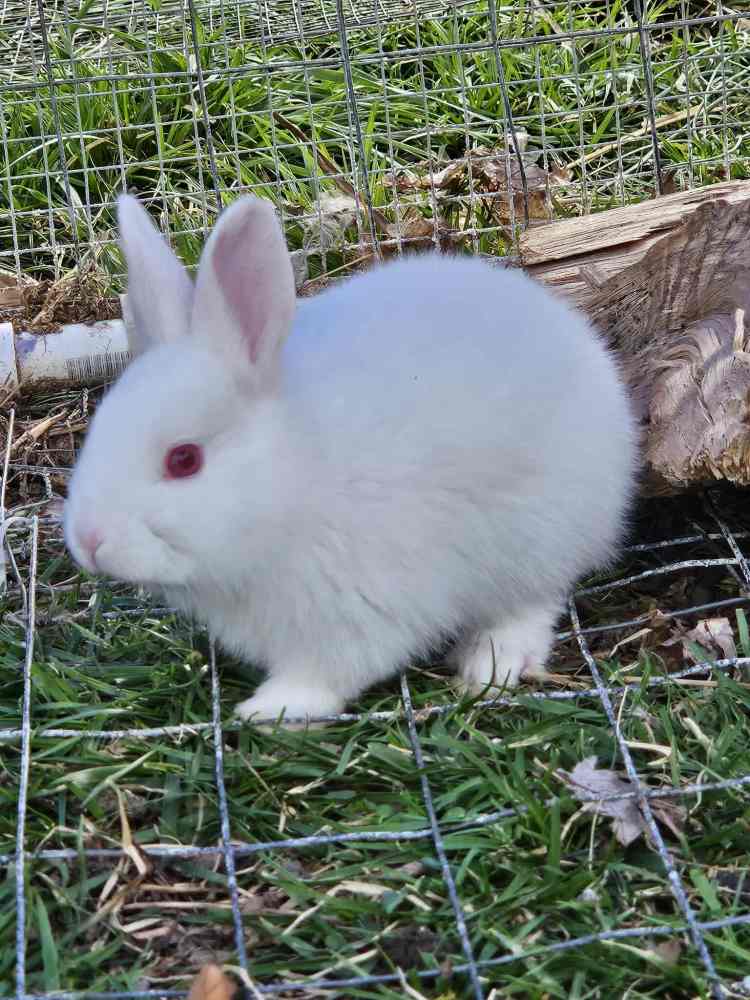
Albino Gene Inheritance: Always Predictable
The albino gene follows simple recessive inheritance, meaning it only expresses itself when a rabbit inherits two copies (cc)—one from each parent. Rabbits with only one copy (C,c) will not be albino; they will show full color but carry the albino gene hidden in their genetic makeup.
Here’s how albino inheritance works in breeding:
- Full Color (C,C) × Full Color (C,C) → 100% Full Color (no albino carriers)
- Full Color (C,C) × Albino (c,c) → 100% Full Color (but carrying albino)
- Albino (c,c) × Albino (c,c) → 100% Albino offspring
- Full Color (C,c) × Full Color (C,c) → 75% Full Color, 25% Albino
- Albino (c,c) × Full Color Carrier (C,c) → 50% Full Color, 50% Albino
This predictability makes the albino gene one of the easiest to track in breeding, as there are no surprises—if both parents are albino, all kits will be albino. If an albino rabbit is bred to a non-carrier (C,C), none of the offspring will be albino, though they may carry the gene.
Why Albino Rabbits Can Be Tricky for Breeders
Because c/c completely masks all other genetic traits, breeders working with albino rabbits face some unique challenges:
- Hidden Genetics – Since albino rabbits don’t display their true colors, you can’t visually confirm what color genes they carry without test breeding. This can make it difficult to know what other traits they’ll pass down.
- Genetic Surprises – Breeding two albino rabbits together guarantees white offspring, but what those kits will produce when bred later is unpredictable unless their lineage is well documented.
- Eye Sensitivity – Albino rabbits have red/pink eyes because they lack pigment in their irises, allowing blood vessels to be visible. This can make them slightly more sensitive to bright light compared to pigmented rabbits.
Despite these quirks, albino rabbits are just as healthy and viable as any other color variety—they simply require careful genetic tracking for breeders who want specific coat outcomes.

Albino in Combination with Other Genes
Even though albino overrides all visible color, rabbits still carry other genetic information. That means pairing an albino with a full-color rabbit can result in kits showing a variety of colors. Some common examples include:
- Albino + Agouti (A_) → If the albino gene isn’t inherited, the offspring will show normal agouti coloring.
- Albino + Self (aa) → If an albino rabbit carries the recessive self gene, it can produce self-colored offspring when bred to a self rabbit.
- Albino + Broken (En/en) → The En/en gene remains hidden in albinos but can reappear in later generations when bred to non-albino rabbits.
This means even though an albino rabbit looks pure white, its genes may carry surprises that only show up once it’s bred to non-albino rabbits.
Final Thoughts: The Power of c/c in Rabbit Breeding
While some rabbit genes work subtly, blending colors and patterns in complex ways, c/c is absolute—if a rabbit carries two copies of the albino gene, it will be white.
Understanding how the albino gene works in breeding allows you to:
✅ Predict albino inheritance with 100% accuracy
✅ Know when a rabbit is carrying albino, even if it appears full color
✅ Track hidden genetics to avoid surprises in future litters
Even though c/c completely masks color, albino rabbits still play an essential role in genetics, passing unseen traits down through generations. Whether you’re working with albinos intentionally or unexpectedly, knowing how this powerful gene operates will help you make smarter breeding decisions without unnecessary guesswork.
