Rabbit coat colors can sometimes feel like a puzzle, but the A/a gene is one of the clearest and most important pieces in figuring out how patterns develop. It dictates whether a rabbit displays the wild, banded agouti pattern or the sleek, solid look of a self-colored rabbit. Understanding how this gene works allows breeders to predict coat colors with ease and refine their lines for specific appearances.
Unlike some genes that lurk unseen in pedigrees, A/a inheritance is fairly straightforward. The agouti gene (A) is dominant, meaning it shows up whenever it’s present, while self-colored rabbits (aa) carry two recessive copies, making them uniformly one color.
What Exactly Does A/a Do?
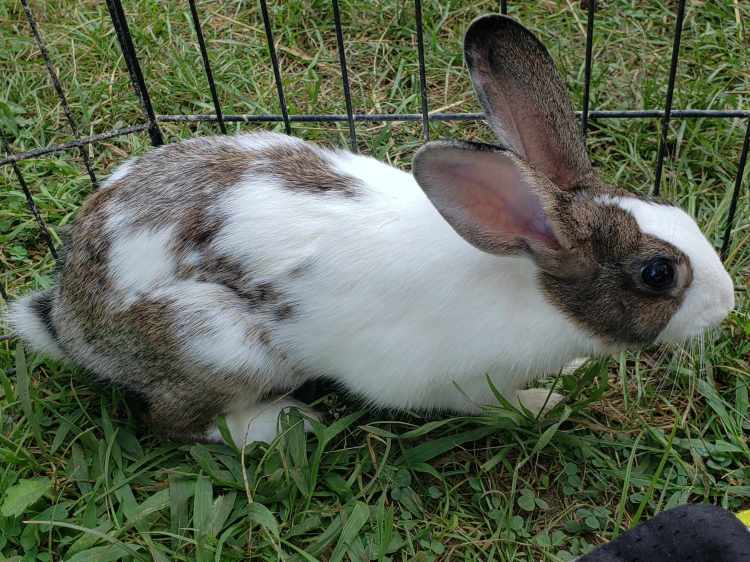
The agouti pattern (A) is the wild-type coloring seen in rabbits and many other mammals. Instead of a uniform shade, agouti coats have banded hairs, meaning each individual hair has multiple colors along its length. This creates that classic “wild rabbit” look with a mix of tan, black, and gray tones blending across the coat.
The self gene (a) eliminates banding, resulting in a rabbit with solid-colored fur—like deep black, rich chocolate, soft lilac, or pale blue. Because self is recessive, it only expresses when two copies (aa) are inherited. That means a rabbit carrying just one self gene (A,a) will still appear agouti, but it can pass the recessive a to offspring.
A/a Inheritance Breakdown
Unlike some genes that require test breeding to identify hidden recessives, A/a genetics are beautifully predictable:
- Agouti (A,A) × Agouti (A,A) → 100% Agouti offspring
- Agouti (A,A) × Self (a,a) → 100% Agouti offspring (but carrying self)
- Agouti (A,a) × Agouti (A,a) → 75% Agouti, 25% Self
- Agouti (A,a) × Self (a,a) → 50% Agouti, 50% Self
- Self (a,a) × Self (a,a) → 100% Self-colored offspring
If a rabbit is self, you immediately know it’s a,a—no surprises there. If a rabbit is agouti, it could be A,A (pure for agouti) or A,a (agouti carrying self). This means breeding two agoutis together can sometimes result in self-colored offspring, but only if both parents carry the recessive a.
Common Agouti vs. Self Colors
Once you know a rabbit’s A/a status, you can start predicting color outcomes within different genetic combinations. Here’s how the A/a gene interacts with major coat colors:
Agouti Colors (A_)
- Chestnut (Black-based agouti)
- Chocolate Agouti
- Opal (Diluted chestnut)
- Lynx (Diluted chocolate agouti)
- Chinchilla (Modified agouti—see below!)
Self Colors (aa)
- Black
- Blue (Diluted black)
- Chocolate
- Lilac (Diluted chocolate)
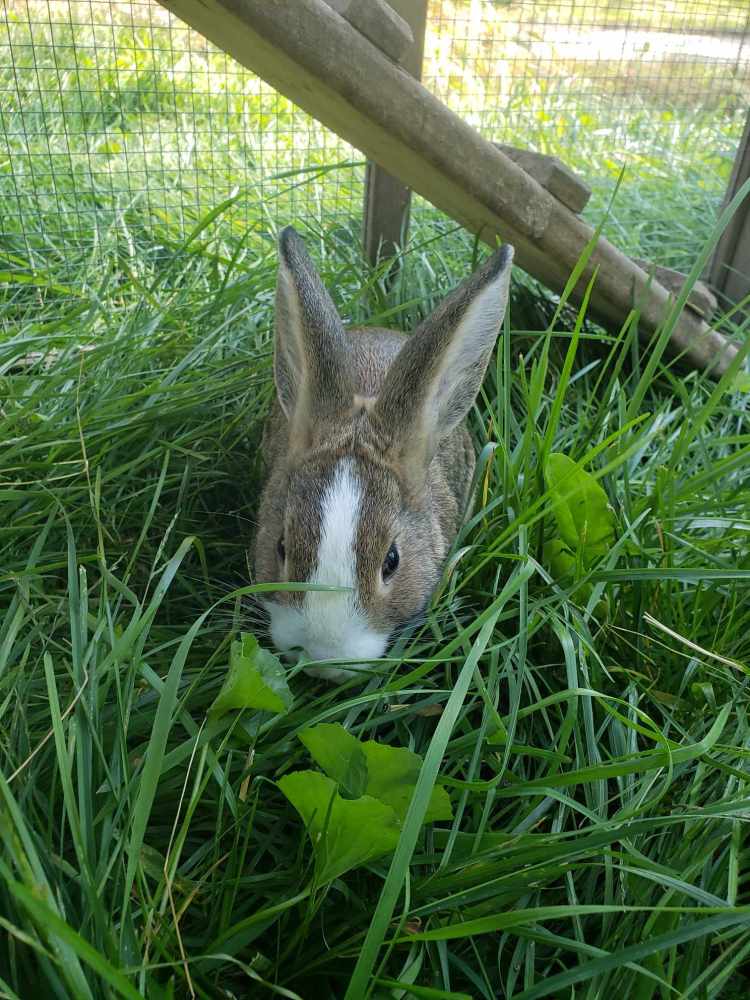
While agouti rabbits will always show banding, self rabbits maintain full uniform color. This difference is especially noticeable when comparing chestnut agoutis to black self rabbits—the chestnut rabbit has a mix of tones, while the black rabbit is solid from nose to tail.
The Chinchilla Exception: When Agouti Doesn’t Look Like Agouti
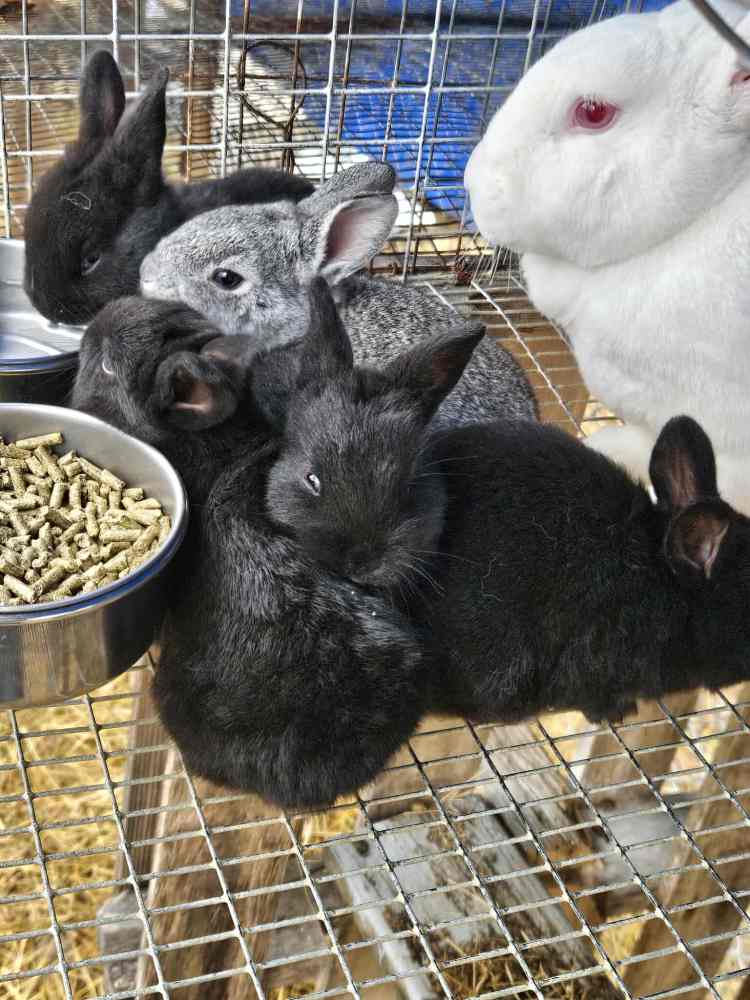
Chinchilla rabbits have the agouti gene (A_), but they also carry the chinchilla gene (cchd) on the C locus, which modifies pigmentation. Normally, an agouti rabbit would have golden or reddish tones in its coat due to yellow pigment, but the cchd gene removes those warm pigments, leaving behind shades of black, gray, and silver.
Think of it like a selective eraser—chinchilla keeps the characteristic banding of agouti hairs but removes the red/yellow pigment, making the rabbit look much cooler-toned compared to a traditional chestnut agouti.
Why does this give breeders fits?
- Chinchilla masks other colors, meaning some rabbits might carry genes for warmer tones but won’t visually express them.
- Since it’s dominant over full color (C) but recessive to albino (cc), breeders sometimes struggle predicting inheritance.
- The shading can vary depending on other genes—some chinchilla rabbits are silver-light, while others look nearly dark steel.
If a breeder is expecting traditional agouti colors and ends up with muted gray-toned rabbits, chinchilla is likely at play! It’s gorgeous but requires careful tracking in breeding programs.
Why Breeders Should Pay Attention to A/a
For those selecting rabbits for specific colors, understanding A/a inheritance is critical:
- If breeding for agouti, pairing two agoutis (especially A,A rabbits) ensures agouti offspring.
- If breeding for solid-colored rabbits, pairing two selfs (a,a) guarantees all offspring will be self-colored.
- If breeding agouti to self, expect a mix—but note that self-colored rabbits will always be a,a, meaning any self offspring will only produce self colors when bred later.
- If breeding for chinchilla, it’s important to account for both the A gene and the cchd modifier, or you may get unexpected results.
This knowledge allows breeders to refine coat colors in their herd with precision, eliminating guesswork and ensuring genetic consistency in future litters.
A/a: A Simple but Powerful Genetic Tool
Compared to some coat color genes that require pedigree analysis or test breeding, the A/a gene is refreshingly straightforward. Its presence (or absence) determines whether a rabbit displays the wild banding of agouti or the uniform appearance of self-colored coats.
- Agouti (A_) rabbits always show their pattern—no hiding recessives.
- Self (a,a) rabbits are solid-colored and guaranteed to pass the self gene on.
- Chinchilla rabbits (A_ with cchd) look different but follow agouti inheritance rules.
- Breeding choices can be made with certainty, eliminating surprise results.
When planning future litters, understanding A/a inheritance gives breeders confidence in producing predictable coat patterns—allowing them to fine-tune their lines without unexpected surprises. And really, in the world of genetics, that’s about as close to a cheat code as you can get.
There’s nothing like the taste of fresh, pasture-raised eggs from a farm that prioritizes quality, nutrition, and ethical care. Our hens produce rich, flavorful eggs, perfect for everything from breakfast to baking. Whether you’re stocking up for your home or looking for a reliable local source, our farm-fresh eggs are a delicious addition to your kitchen. Order yours today!
