The lunatic farmer who made sustainability personal
Joel Salatin calls himself a “Christian libertarian environmentalist capitalist lunatic farmer.” And somehow, that wild mix fits. From his family-run Polyface Farm in Swoope, Virginia, Salatin has become one of the most recognizable voices in regenerative agriculture—and one of the most influential community educators in the local food movement.

👨🌾 Farming as Relationship, Not Just Production
Salatin’s approach to farming centers on relationships—between soil and animal, farmer and consumer, land and legacy. His rotational grazing systems mimic nature, allowing cows, chickens, pigs, and rabbits to thrive in symbiotic cycles. But what sets him apart is how he teaches these methods: not as doctrine, but as invitation.
He’s written 17 books, hosted thousands of farm tours, and spoken to audiences ranging from homesteaders to CEOs. His message is consistent: you don’t need to be perfect—you need to be present. Farming, in his view, is about stewardship, not control.
🏡 Polyface Farm: A Living Classroom
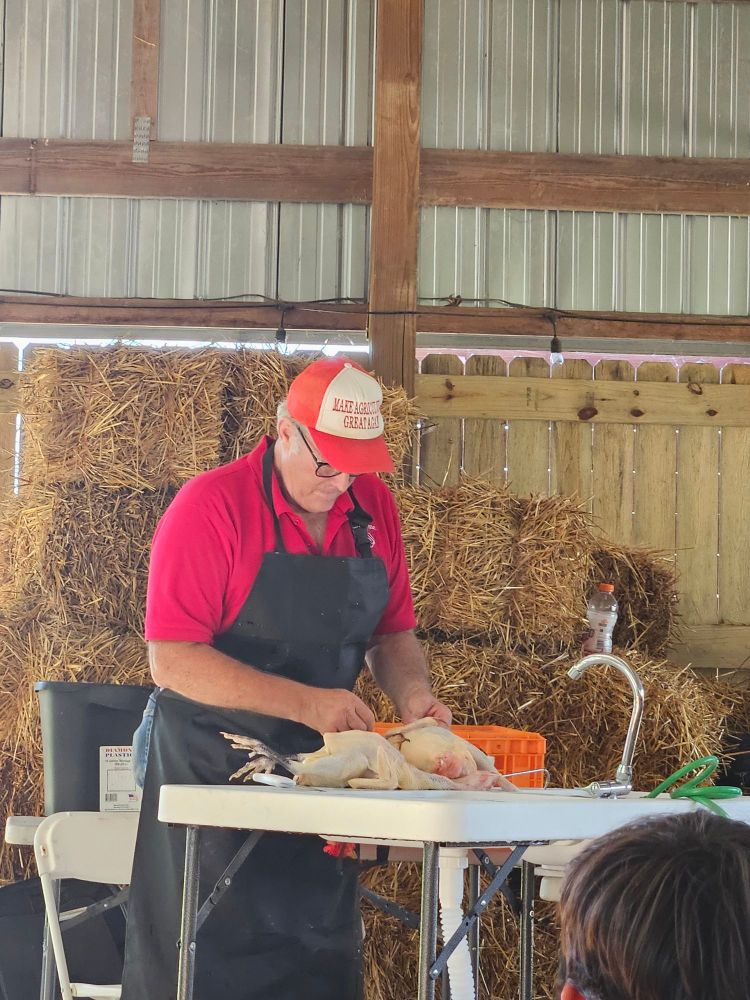
Polyface isn’t just a farm—it’s a hub for community learning. Families, interns, and curious neighbors come to walk the pastures, ask questions, and see regenerative systems in action. Salatin’s transparency is radical: he opens his farm to scrutiny, encourages experimentation, and shares both successes and failures.
This openness has inspired a generation of farmers to rethink their practices—not just for profit, but for people. His direct-to-consumer model bypasses industrial supply chains, keeping food local and relationships strong.
🗣️ Advocacy Rooted in Humor and Conviction
Recently, Salatin joined hundreds of farmers in Washington D.C. to oppose the EATS Act—a federal proposal that would override state-level animal welfare laws. His concern wasn’t just about pigs (though he’s vocal about honoring their “pigness” through pasture-based systems). It was about governance.
He argued that communities should have the right to set their own standards for animal welfare, food production, and ethical sourcing. Federal overreach, he warned, erodes trust and inflames partisan hostility. When decisions are made far from the people they affect, nuance disappears—and so does accountability.
Salatin’s pigs live on pasture, digging, running, and exploring. Not because of legislation, but because his customers demand transparency and dignity. And he believes that honoring the life of an animal is inseparable from honoring the life of a person.
“A nation uninterested in happy pigs,” he said, “soon loses its moral and ethical framework to honor the Tomness of Tom and the Maryness of Mary.”
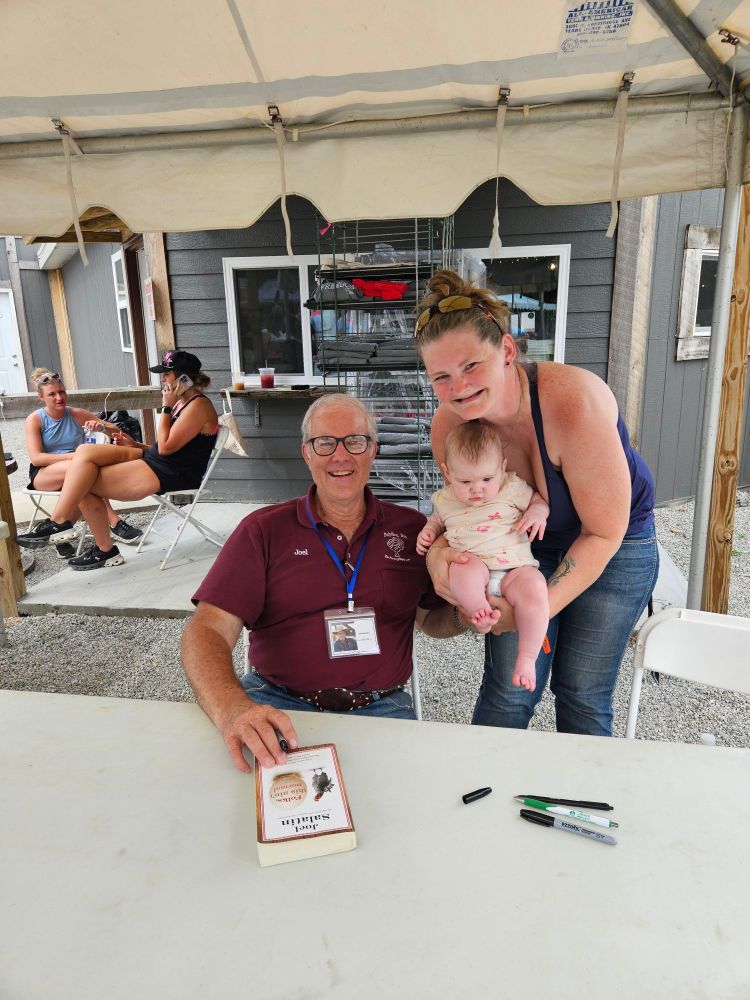
Joel Salatin
🌱 Why He Matters to Us
In a time when rural life is often dismissed or romanticized, Joel Salatin reminds us that community resilience starts with local food, shared knowledge, and ethical labor. He’s not selling a fantasy—he’s modeling a system. One that’s messy, imperfect, and deeply human.
For those of us balancing caregiving, homesteading, and advocacy, Salatin’s work offers both practical tools and emotional permission. You don’t have to do it all. But you can do something. And that something—when rooted in reciprocity—can change everything.
🛠️ Salatin-Inspired Practices at Huckleberry Farms
Where theory meets muddy boots and real-life adaptation
Joel Salatin’s influence isn’t just philosophical—it’s practical. At Huckleberry Farms, we’ve woven several of his regenerative principles into our daily rhythm, adapting them to fit our land, our animals, and our chaos.
🐓 Chickens and Rabbits in Shared Systems
We combine chickens and rabbits in overlapping zones, letting each species contribute to the health of the other. The chickens scratch through rabbit droppings, wood chips, and fallen leaves, aerating the bedding and accelerating decomposition. This produces a rich, earthy compost and a surprisingly pleasant woodsy odor—like the forest floor after rain. Their constant movement helps reduce fly pressure and break the cycle of disease for both species, creating a cleaner, more balanced micro-ecosystem. Meanwhile, the rabbits offer quiet manure and a gentle presence, teaching patience and care through their stillness. It’s not just efficient—it’s relational. And it reflects Salatin’s belief in stacking enterprises for mutual benefit.
🌿 Deep Litter for Soil and Sanity
We use deep litter bedding in our coops and under our hutches—not just for warmth and cleanliness, but for microbial richness. Layers of leaves and wood shavings intermingled with manure from the chickens and rabbits breaks down slowly, creating compost in place. It’s low-maintenance, high-impact, and a nod to Salatin’s emphasis on letting biology do the work.
⚡ Electric Netting and Pasture Rotation
Our birds don’t stay put year round. We use portable electric netting to rotate chickens across the property through the warm months, giving them fresh forage and letting the land rest between cycles. It’s labor-intensive, especially in wind and mud, but it keeps the flock healthy and the soil alive. Salatin’s “eggmobile” may be more polished—ours is more pieced together—but the principle holds.
🍂 Seasonal Forage and Waste Reduction
We feed rabbits fallen leaves, garden scraps, and seasonal forage, turning waste into nourishment. It’s not a complete feed system, but it’s a regenerative one. And it reflects Salatin’s core ethic: use what you have, honor the cycle, and feed the soil while you feed your animals.
🧠 Observation Over Automation
We don’t rely on sensors or apps. We rely on watching. Listening. Adjusting. Salatin teaches that farming is about presence, not perfection—and that’s exactly how we operate. If the chickens are restless, we move them. If the bedding smells off, we add more carbon. If the rabbits seem bored, we toss in a handful of leaves.
🤝 From Inspiration to Integration
Joel Salatin may be a national figure, but his impact is felt most deeply in places like ours—where small farms, shared meals, and neighborly wisdom still matter. His teachings don’t live on a pedestal; they live in our compost piles, our pasture rotations, and our daily choices to care for land and life with integrity.
At Huckleberry Farms, we don’t follow a script—we follow a rhythm. One shaped by observation, reciprocity, and the belief that good farming is good community. Salatin reminds us that sustainability isn’t just about soil—it’s about sovereignty. About choosing systems that reflect our values, nourish our people, and leave the land better than we found it.
And that’s the kind of lunacy we’re proud to live by.
