
Spoiler: It’s not just cuddling chickens and watching sunsets.
People love the idea of farm life. They picture peaceful mornings, happy animals, and a wholesome rhythm of tending the land. And yes, those moments exist. But they’re woven into a daily grind that’s relentless, exhausting, and often invisible to anyone not living it.
So here’s what actually goes into running our small livestock farm—every season, every day, every weather pattern. Because farming isn’t just vibes. It’s work.

📦 What We Actually Produce: Livestock, Eggs, Meat, and Conservation
This isn’t just a petting zoo. Our animals serve real purposes—nutritional, educational, and ecological.
- Rex Rabbits: Pedigreed from proven Wisconsin show lines. We raise them for meat and for show stock, supporting 4Hers and breed enthusiasts.
- Chinese Brown Geese: On the Livestock Conservancy watch list. We raise them to help preserve the breed and educate others about heritage livestock.
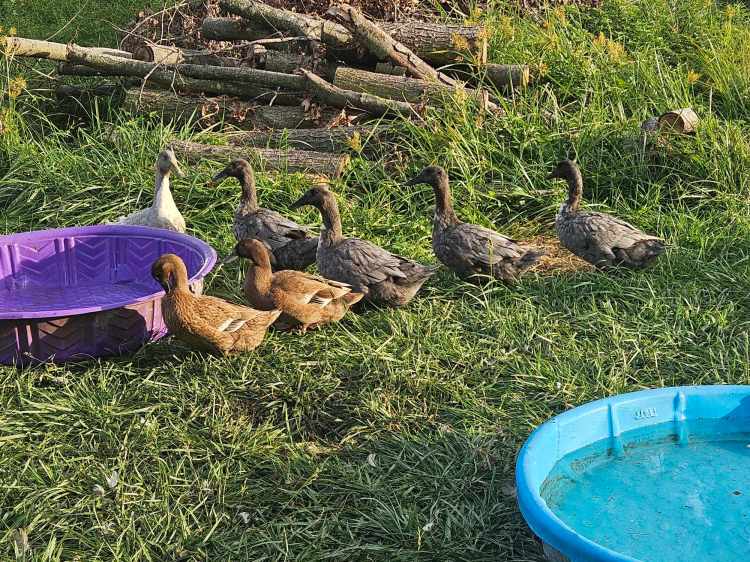
- Swedish Ducks: Also on the watch list. We maintain two flocks—one here, one on the neighboring property—and sell duck eggs seasonally for eating and hatching.
- Chickens: We keep over 60 birds for eggs and meat. When hens age out of consistent laying (around 3 years), they become stew hens, which we also offer for sale.
This is a working farm. Every animal has a job. Every product has a purpose. Every species demands its own kind of stewardship.
🐇 Rabbit Care: Constant, Seasonal, and Strategic
Before we dive into the daily rabbit chores, it’s worth explaining how we divide the work. We expect our kids to contribute—not just to lighten the load, but to teach responsibility, resilience, and the value of care. My daughter has taken to the rabbits with a natural sense of stewardship. She’s been working alongside me for years, so it made sense for her to take the lead on their care. I check on the rabbits in the early mornings—before school starts or while the kids are getting ready—and again after I return from my off-farm job. She handles watering every day after school and usually twice on weekends. She also helps me butcher the rabbits we process for our freezer or for sale. It’s not always easy work, but it’s honest, necessary, and something we do together.
- Girl child waters the rabbits every day. When it’s hot or freezing, we check 3x a day or more between us. When the weather’s mild, we check twice a day.
- Boy child fills recycled water jugs for the chicken coop and duck pool, then refills them so we have enough for rabbit watering.
- I do a full feed and water check once a day, making sure everyone’s eating, drinking, and not plotting escape.
- In summer, we forage fresh greens to diversify their diet—plantain, clover, dandelion, and whatever else the land offers.
- We also repair cages and hutches as needed, because rabbits chew through everything eventually.
🐔 Chicken, Duck, and Goose Management: Herding Chaos
Before we get into the daily bird chores, it’s worth noting how we split responsibilities. My son handles the watering because he’s strong enough to carry multiple jugs and trustworthy enough not to flood the yard when using the hose. The chickens no longer free range, so they don’t need rounding up at night—but the ducks and geese still require some coaxing to return to the Raken (our rabbit-chicken pen). I’m usually the one who locks them in each evening and I’m the only one who feeds the birds, unless the kids are tossing out leftovers from dinner. We do have one rogue hen who’s taken up residence in the neighbor’s yard. I’ve started scattering feed in our driveway to lure her back—she’s inching closer by the day, and I’m hopeful we’ll get her home soon.
- I check feeders daily, but typically refill every two days since they don’t empty quickly.
- Eggs are collected during feeding—unless a hen has gone rogue and laid them in the hay pile or, in one case, moved into the neighbor’s yard.
- I scatter feed in the driveway to coax the rogue hen back toward the coop. It’s working—slowly.
- Ducks and geese still require evening herding into the Raken (rabbit-chicken pen), which I handle myself.
- Adult ducks and geese sleep in the rabbit pen, so coordinating multiple species without losing feathers or patience is a nightly ritual.
- Boy child keeps the duck pool filled, which means hauling water jugs and dumping/refilling as needed.
- During the warm months, part of the birds are in electric netting and are moved around our property and the neighboring 5 acres in order to allow for maximum foraging as well as aeration and fertilization of the ground.
🌬️ Seasonal Chores: Fall and Winter
Fall and winter bring a different rhythm—slower in pace, but heavier in responsibility. With my off-farm job and shorter daylight hours, we rely even more on planning, teamwork, and instinct. The kids know to check waterers for ice and bedding for dampness. I do late-night rounds with a flashlight, listening for coughs or signs of stress. It’s a season of quiet endurance, where every warm coop and dry pen is earned through vigilance and care.
- As temperatures drop, we shift focus to deep bedding management.
- We add wood chips to the rabbit pen and chicken coop regularly to keep ammonia down and microbial life up.
- We monitor for drafts, frozen waterers, and signs of respiratory stress.
- We install plastic sheeting as windbreaks on the north and south sides of the rabbit pens and the wire part of the chicken coop to block drafts. The plan is to build a permanent roof over the rabbit cages next year, but for now, the plastic barriers help keep the worst of the wind out.
- The pace slows, but the vigilance increases.
🌞 Seasonal Chores: Spring and Summer
Spring and summer are our busiest seasons—when everything grows, everything breaks, and everything needs attention at once. The garden and berry patch feed both our household and our animals, so we treat them like living systems, not scenery. Pools get moved to avoid mosquito swarms, and infrastructure repairs become a weekly ritual. The heat pushes us hard, but it also brings abundance. We forage daily for the rabbits, harvest herbs for the birds, and patch fences before anyone escapes. It’s a season of sweat, strategy, and shared effort
- Weeding and watering the garden and berry patch—daily in dry spells.
- Harvesting fruits, herbs, and greens for both humans and animals.
- Moving pools around to prevent mud pits and mosquito breeding.
- Foraging for rabbits to keep their diet diverse and nutrient-rich.
- Repairing infrastructure—coops, cages, fences, and water systems that inevitably break under heat, use, or animal mischief.
- Maintaining incubators: I collect fertile eggs, monitor them for 21 to 28 days depending on species, and sometimes turn them by hand. After hatch, I update records and track outcomes.
- Brooder care: Once chicks, ducklings, or goslings hatch, we all take turns feeding and watering the babies until they’re ready to transition outdoors.

🧠 Invisible Labor: The Mental Load
The hardest work is often the least visible. It’s the mental load that never shuts off—the constant calculations, observations, and decisions that keep the farm running. I track feed levels in my head while driving to my off-farm job. I notice a limp or a cough during evening rounds and mentally rearrange tomorrow’s tasks. Predator proofing isn’t just hardware cloth—it’s vigilance, intuition, and sleep lost to worry. Every season requires a shift in strategy, and every shift demands planning, budgeting, and documentation. This isn’t just physical labor. It’s systems thinking, emotional resilience, and the kind of quiet leadership that rarely gets seen.
- Tracking feed inventory
- Managing animal health and watching for signs of illness or injury
- Designing predator-proofing strategies
- Planning seasonal transitions (bedding, shelter, forage availability)
- Budgeting for feed, bedding, repairs, and vet care
- Communicating with customers, subscribers, and community members
- Documenting what worked, what didn’t, and what needs to change next season
💬 Final Thought: This Is a Family Operation, Not a Hobby
Every member of our household contributes. The girl child monitors hydration like a field medic. The boy child hauls water like a seasoned farmhand. I coordinate, troubleshoot, and do the heavy lifting—literally and emotionally.
This isn’t just a lifestyle. It’s a survival system.
It’s not just cute animals. It’s labor, logistics, and love.
So the next time someone says, “It must be so peaceful out there,” I’ll smile.
Because yes—it is.
But only because we work for it every single day.
