Farming is beautiful. Farming is brutal.
It’s early mornings, late nights, and the kind of exhaustion that settles deep in your bones. It’s watching animals you love suffer or die. It’s fixing broken fences in the rain, hauling feed with a fever, and wondering if you’ll ever catch up—financially, physically, emotionally.
Even on a small livestock farm like ours, the pressure is relentless. The animals don’t wait. The weather doesn’t care. And the bills keep coming.
We don’t talk about it enough. But we need to. Because the truth is: farming breaks people. And sometimes, it breaks them all the way.
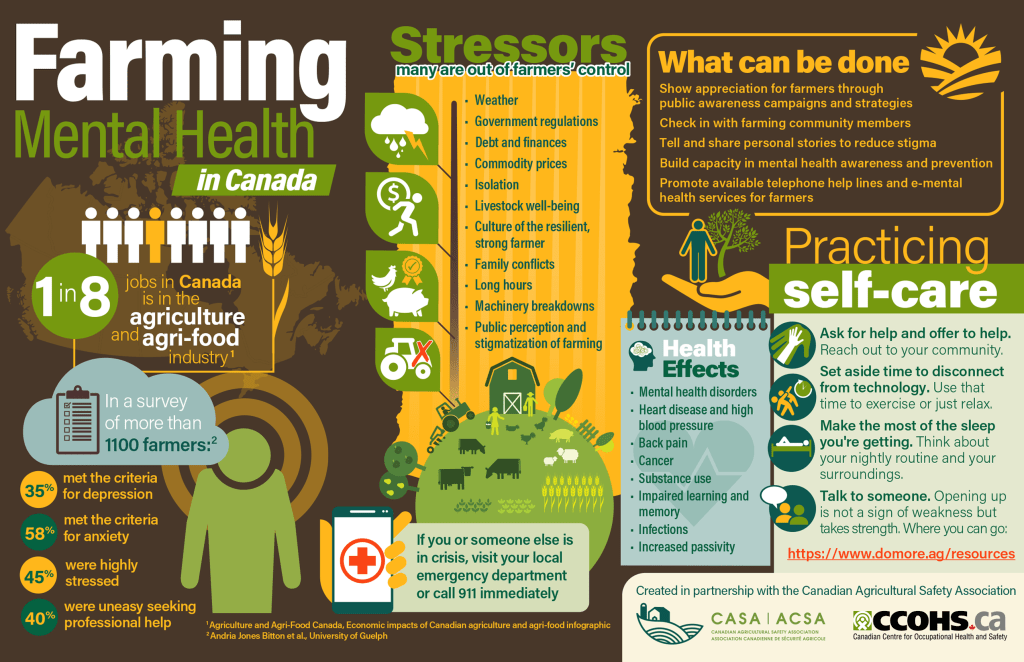
According to the Centers for Disease Control, the suicide rate among farmers is 3.5 times higher than the general population. Between 2000 and 2002, suicide rates in rural areas climbed 46%—compared to 27.3% in metro areas. And in the last 15 years, 45% of farmers and ranchers who died by suicide were aged 65 and older.
That’s not just data. That’s our neighbors. Our elders. Our friends.
That’s us.
The Signs We Miss—Or Ignore
Stress and depression don’t always look like sadness. Sometimes they look like:
- Change in routines: Skipping church, quitting 4-H, avoiding the feed mill or coffee shop
- Decline in livestock care: Animals losing condition, showing signs of neglect
- Increase in illness: More colds, flu, aches, and chronic pain
- More accidents: Fatigue and distraction leading to injuries
- Farmstead decline: Buildings and grounds falling into disrepair
We tell ourselves it’s just a rough season. Just a bad week. Just a little burnout.
But sometimes, it’s more than that. And if we don’t say something—if we don’t ask, check in, or offer help—we lose people.
Stephanie Weatherly, chief clinical officer for Psychiatric Medical Care, says it plainly:
“If you notice any of these, say something. Having those conversations can help.”
Because here’s the hope:
80% of people who suffer from depression can go into total remission.
You can get better. You just need the help you deserve.

What It Feels Like
Some days, it feels like you’re failing at everything.
Like the animals deserve better.
Like your family deserves better.
Like you’re the weak link in a chain that’s supposed to hold everything together.
You look at the barn and see everything you haven’t fixed.
You look at the pasture and see weeds you didn’t pull.
You look at the feed bill and wonder how you’ll pay it.
You look at yourself and wonder if you’re even cut out for this.
That voice in your head? The one that says you’re not enough?
It’s lying.
You are enough.
You are not alone.
And you are not the only one who’s ever felt this way.
What Help Looks Like
Help doesn’t always mean therapy right away. Sometimes it means:
- A friend who listens without judgment
- A neighbor who shows up with coffee and doesn’t ask questions
- A doctor who takes your pain seriously
- A hotline that answers when you’re at your lowest
If you or someone you know is struggling, please reach out.
The Suicide and Crisis Lifeline is available 24/7.
Call or text 988.
You don’t have to explain. You don’t have to be strong.
You just have to reach out.
Final Thought: You’re Still Here
Farming asks everything of us. And sometimes, it takes more than we have to give.
But if you’re reading this, you’re still here.
And that matters.
You are not weak for struggling.
You are not broken for needing help.
You are human. And you are loved.
So if you’re in the weeds—literally or emotionally—know this:
You’re not alone. You’re not a failure. You’re not done.
You’re still here.
And that’s enough.
