
Driving back from the Homestead Freedom Festival this weekend, I kept glancing at the thermometer on the dash. The numbers weren’t static—they danced with the landscape. Rolling past lush roadside woods and ponds, the temperature hovered around 93°F. But as I entered long stretches flanked by bare cropland—open fields, no trees, no water—the numbers shot up to 97°F.
Four degrees might not sound like much, until you remember that temperature affects everything: soil biology, water retention, plant stress, and the overall health of a growing system. And in that moment, it hit me again how much our land practices shape not just the soil, but the air above it.
And it wasn’t just the fields. The interstate itself radiated heat back into the air—a slab of high-speed asphalt acting like a skillet under the sun. That kind of radiant heat, combined with exposed soil, creates conditions that suck the life out of a landscape. Literally.
Why Bare Soil Behaves Like a Radiator
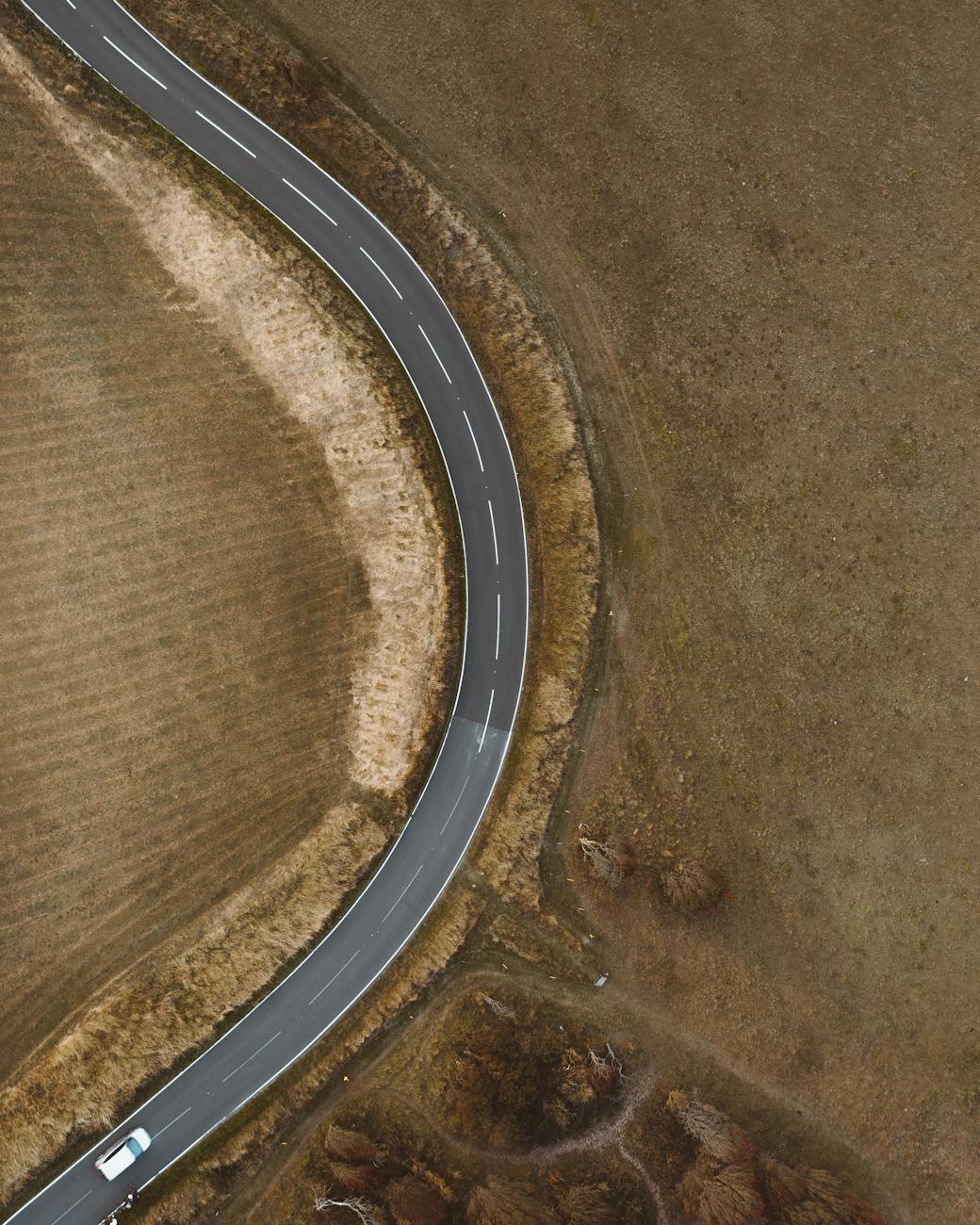
Bare soil is one of the most underappreciated sources of localized heat. Without shade, plant cover, or organic mulch, it soaks up the sun’s energy during the day and releases it back like a furnace. That process bakes the topsoil, disrupts microbial life, and accelerates evaporation, leaving the soil drier, more compacted, and less productive with every passing hour.
It’s more than uncomfortable—it’s a biological shutdown. Microbial activity slows, root zones stress, and the soil’s sponge-like structure begins to collapse. This isn’t theory—it’s observable, and it’s becoming increasingly urgent in the context of climate resilience and regenerative land care.
Bare fields with no canopy or cover absorb and radiate heat—raising the temperature and increasing water stress across the entire system. That’s not just uncomfortable. That’s destructive.
The Living Thermostat: Trees, Water, and Shade
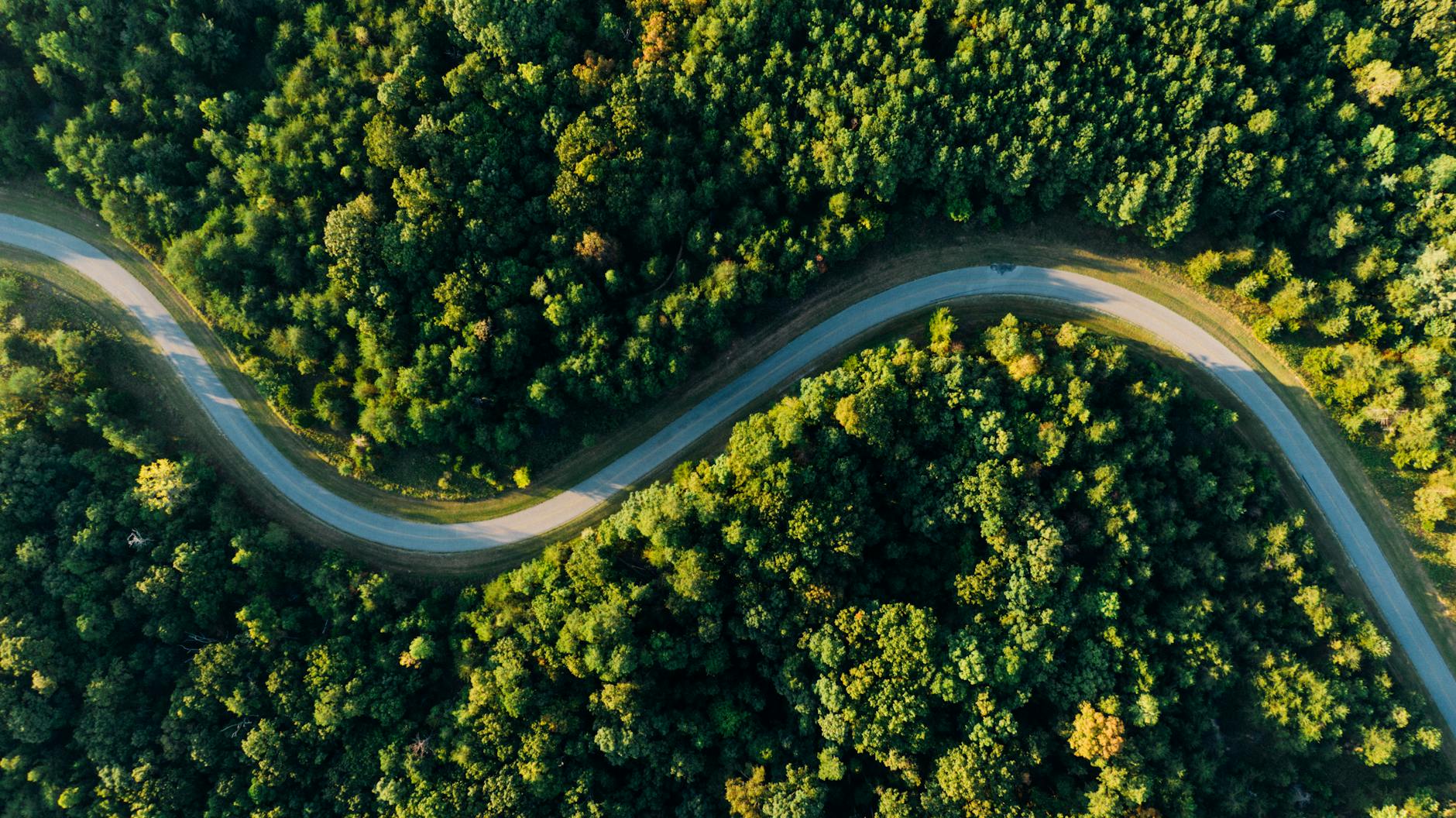
Forests and well-watered landscapes act as natural cooling systems. Trees provide shade, slow down wind speeds, and release moisture into the air through transpiration—an invisible but powerful process where leaves exhale water vapor, contributing to natural humidity and temperature regulation. This transpired moisture cools the surrounding air much like sweat cools our skin, creating microclimates that are more hospitable, stable, and biologically alive.
These natural elements don’t just passively exist in the ecosystem—they actively modulate it. Trees are like green thermostats, adjusting the temperature in real time. Water acts as a thermal reservoir, absorbing heat by day and releasing it slowly at night. And shade, though often overlooked, can lower ground-level temperatures by 10–20°F, reducing the need for irrigation, lowering plant stress, and protecting soil microbial life from fatal overheating.
On the flip side, bare fields with no canopy or cover absorb and re-radiate heat, raising surface temperatures and increasing water stress across the entire system. That’s not just uncomfortable—it’s ecologically destructive. Localized heating disrupts pollinator flight paths, bakes beneficial microbes, and accelerates evaporation so quickly that rain feels almost irrelevant unless something is there to hold it.
Why Bare Soil Should Rarely Exist on a Living Farm
At Huckleberry Farms, we’ve adopted a simple motto: cover everything. And we mean everything. Not just the garden beds—though those are certainly mulched—but also:
- Walkways that would otherwise get packed and sunbaked
- The chicken coop, where deep bedding both manages waste and builds compost
- Areas that are super compacted or bare and suffering from exposure
- The old crushed coal alleyway, which we’re slowly converting into usable, life-supporting pasture
Because here’s the truth: bare soil is exposed, vulnerable, and leaky. It loses moisture to evaporation. It gets crusted and compacted. And it disrupts the complex biological networks—fungi, bacteria, worms, and insects—that help plants thrive.
The Wood Chip Debate: Are We Making the Soil Hotter?
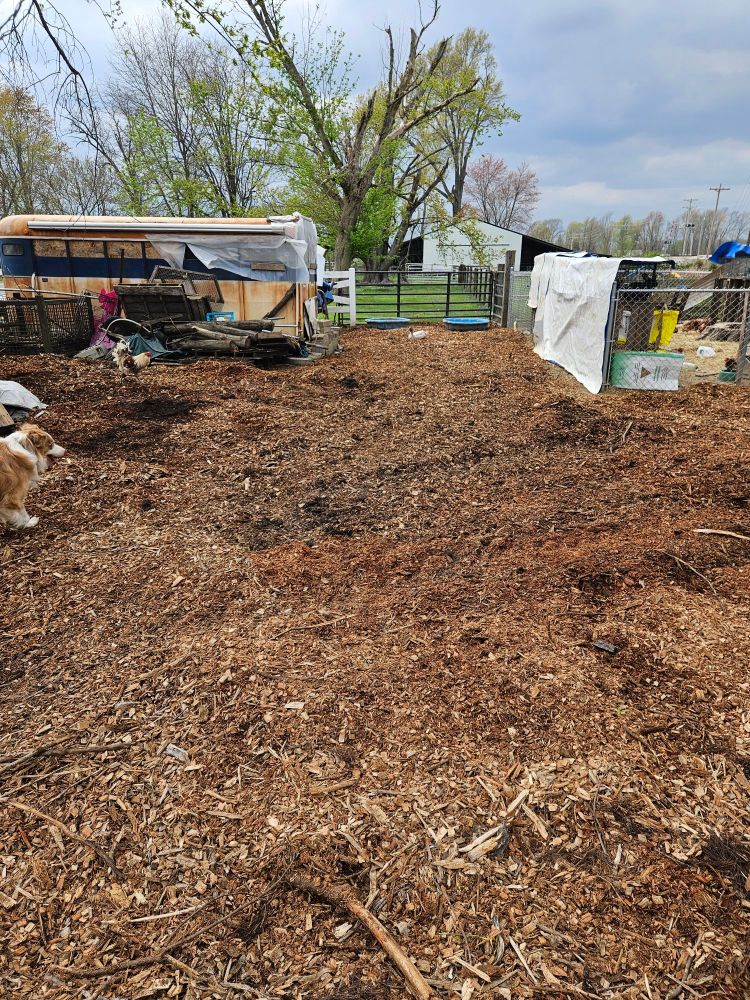
We get it—wood chips look heavy and steamy, especially when they’re piled high and actively composting. Someone recently told us, “Aren’t you just trapping heat in the ground by holding in moisture?”
Well, yes and no. If you’re picturing a steaming chip pile tucked behind the barn in August, that’s one thing. But laid flat as a mulch layer, the dynamics are completely different. Wood chips act like insulation, not a heater.
- They buffer temperature swings, keeping roots cooler on hot days and warmer on cold ones
- They slow evaporation, which means we water less and still retain moisture near the root zone
- They build a fungal network by breaking down slowly over time
- And they serve as an invitation for worms, beetles, and fungi—the living workforce of our soils
How We Observe the Difference on the Farm
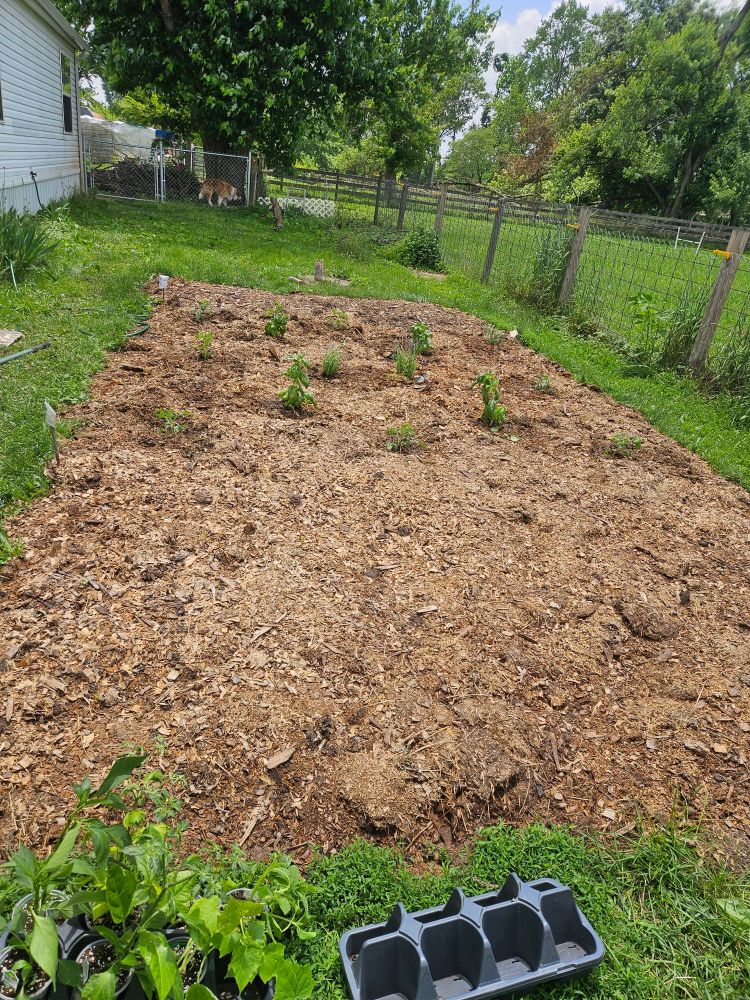
When we start new garden beds, we lay down cardboard to suppress weeds, then cover it with partially composted deep bedding from the chicken coop—primarily wood chips loaded with nitrogen-rich manure and well on their way to becoming compost.
Each year, when we clean out the coop, we add another layer to those beds. And when spring rolls around? We dig in—and the soil feels like it’s breathing.
It’s alive.
We find worms by the handful.
Moisture clings to the soil long after a rain.
The structure is soft, fluffy, and full of promise.
And the surface? Never cracked. Never crusted. Never bare.
Final Thought: Climate Starts at the Ground Level
That four-degree difference I saw while driving wasn’t just a number—it was a climate signal. It told me where the ground was functioning as a living sponge… and where it was acting more like a stovetop.
So whether it’s a tomato bed, a back pasture, a forest edge, or a city boulevard—cover your soil. Plant something. Mulch it. Let biology return.
Because when the ground stays cool, the ecosystem stays calm—and the farm, the community, and the planet all stand a better chance at thriving.
