If you’ve ever felt lost in the complexities of rabbit genetics, rest assured—there’s one gene that refuses to play mind games: the En/en gene, responsible for broken patterns in rabbits. Unlike many genetic traits where recessive carriers lurk unseen, making prediction trickier than solving a Rubik’s Cube blindfolded, the En/en gene doesn’t hide. It announces itself in full color—literally.
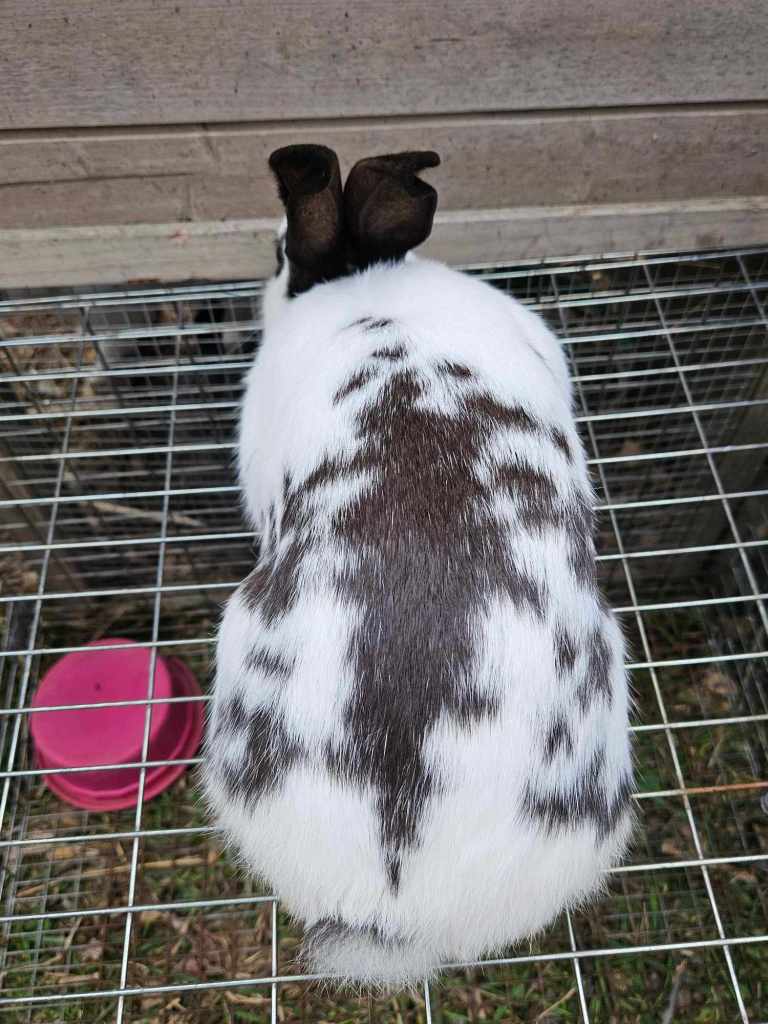
Once you understand how this gene works, predicting the pattern of any litter becomes as simple as following a cheat sheet. No need to painstakingly map out punnett squares (though, if you enjoy them, we won’t stop you). En is dominant, meaning it can’t be carried unseen—only expressed visually. If a rabbit has two copies of the recessive form (en,en), it will be fully solid/self-colored. If it has one dominant (En,en), it will be broken-patterned. And if it has two dominant copies (En,En), you’ll get what breeders call a “Charlie”—a rabbit with less than 10% color.

The Simple Rules of En/en Inheritance
While some genes require deep detective work to figure out their presence, the En/en gene keeps things refreshingly simple. You see what you have. And since En is dominant, you can’t secretly carry it without showing it. That means breeding outcomes are completely predictable. Here’s how the inheritance works:
- Self (en,en) × Self (en,en) → 100% Self rabbits
- Broken (En,en) × Self (en,en) → 50% Broken, 50% Self
- Broken (En,en) × Broken (En,en) → 25% Charlie, 50% Broken, 25% Self
- Charlie (En,En) × Broken (En,en) → 50% Charlie, 50% Broken
- Charlie (En,En) × Self (en,en) → 100% Broken
- Charlie (En,En) × Charlie (En,En) → 100% Charlie
That’s it. No recessive surprises, no hidden genetics waiting to pop up generations down the line. What you see is what you get.
Why This Matters in Breeding
For breeders looking to maintain specific coat patterns, understanding this gene is critical. Unlike some genetic traits that require guessing, tracking pedigrees, or test breeding to uncover hidden recessives, En/en gives you full transparency.
- If you want all solid rabbits in a litter, breed two selfs.
- If you want a mix of brokens and selfs, breed a broken to a self.
- If you want to ensure every single kit is broken, breed a Charlie to a self.
- Want to avoid Charlies altogether? Don’t breed two brokens together, since 25% of the litter will be Charlies.
- Two Charlies will always produce only Charlies, making it an undesirable pairing unless you intentionally want all light-marked rabbits.
Charlies, though visually distinct, often have increased health risks because their lack of markings can correlate with underdeveloped digestive systems, particularly in breeds where this pattern is linked to genetic traits affecting gut function. This makes understanding the En/en gene not just useful, but essential when planning litters.

Beyond En/en: The Exception of cc (Albino Factor)
Now, there’s one exception to the “What You See Is What You Get” rule: when albino (cc) overrides everything. Rabbits that are homozygous for the c locus recessive albino gene (cc) will be fully white regardless of their other color or pattern genes. This means an En/en rabbit technically still carries its broken pattern, but you won’t see it because albino genetics mask it entirely.
This is where punnett squares actually come back into play—because if a rabbit is albino, you can’t visually confirm the presence of broken patterning. To determine whether an albino rabbit carries the En gene, you have to look at its lineage or test breed.

Final Thoughts: Why the En/en Gene is One of the Best Tools in Rabbit Breeding
Rabbit genetics can be tricky, but the En/en gene is one of the most predictable factors in coat patterns. Because it’s visually expressed and cannot be carried unseen, it removes guesswork, making litter planning simple and strategic.
- If you’re breeding for specific patterns, understanding En/en inheritance lets you control markings with precision.
- If you want to avoid Charlies, knowing how En,En combinations work ensures you structure your pairings wisely.
- If you’re working with albinos, recognizing when cc overrides En/en helps keep track of unseen genetics.
It’s rare in breeding to have such a clear-cut genetic tool, but the En/en gene delivers that luxury. So next time you’re pairing rabbits, you’ll know exactly what to expect—even before the first kit opens its eyes.
There’s nothing like the taste of fresh, pasture-raised eggs from a farm that prioritizes quality, nutrition, and ethical care. Our hens produce rich, flavorful eggs, perfect for everything from breakfast to baking. Whether you’re stocking up for your home or looking for a reliable local source, our farm-fresh eggs are a delicious addition to your kitchen. Order yours today!
