
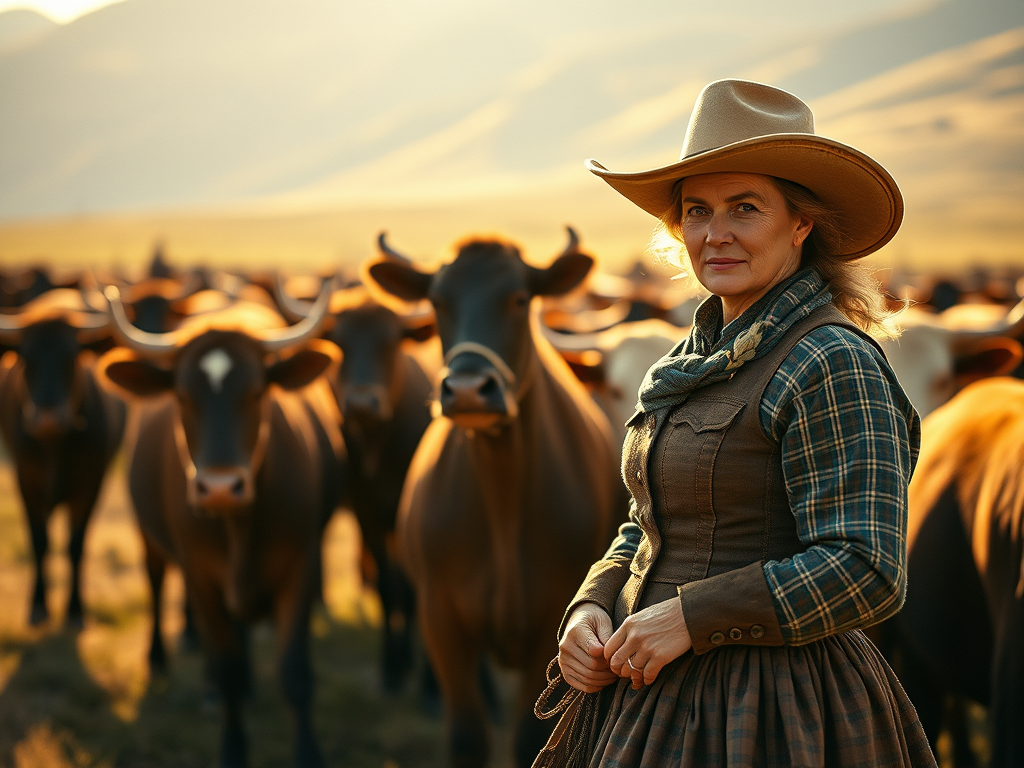
When we think of cowboys, the image that often comes to mind is one of rugged men, working long days on horseback, wrangling cattle across the open plains. But the truth is, the cowboy culture has always been about more than just men on horseback. For centuries, women have been breaking barriers in the world of ranching, carving out spaces for themselves in a field traditionally dominated by men. From the tough-as-nails pioneers of the 19th century to the modern-day female ranchers leading sustainable farming movements, women have long played an integral role in shaping the American West. Their stories are ones of resilience, strength, and a commitment to the land.
As we celebrate National Women’s History Month this March, we honor the legacy of these trailblazing women who defied societal norms, broke down barriers, and left their mark on cowboy culture. This is the story of the women of the West—past and present—who have shaped ranching in America and continue to inspire future generations.
The Pioneering Women of the West
The American West was a harsh and unforgiving place, especially during the 1800s when the idea of manifest destiny led thousands of families to pack up their lives and head into uncharted territory. Women played a crucial role in this westward expansion, taking on more than just traditional domestic duties. In many cases, they became homesteaders, ranchers, and business owners in their own right.
One of the earliest examples of a woman making her mark in the ranching world was Elizabeth Collins, often referred to as the “Cattle Queen of Montana.” In the late 1800s, Elizabeth and her husband left the gold mines to start a cattle ranch in Montana, where she quickly became known for her skillful management of the herd. After her husband’s death, she continued to run the ranch on her own, growing the business and gaining respect from fellow ranchers, both male and female. Her success as a rancher at a time when women were often confined to domestic roles was groundbreaking.
Another remarkable woman from this era was Mary Ann Goodnight, who, along with her husband Charles Goodnight, played a key role in saving the American bison from extinction. Mary Ann raised orphaned bison calves by hand on their Texas ranch, contributing to the preservation of a species that had been decimated by hunting and habitat loss. Her compassion and dedication to wildlife conservation are still admired today.
These early pioneers paved the way for future generations of women to step into the world of ranching, proving that resilience, resourcefulness, and hard work knew no gender.

Women in Rodeo: Breaking Barriers in the Arena
While women were proving themselves capable on ranches, they were also making their mark in another male-dominated space: rodeo. In the late 19th and early 20th centuries, women began participating in rodeo competitions, often competing in events like bronc riding, steer roping, and trick riding.
One of the most famous female rodeo stars was Annie Oakley, a sharpshooter and performer in Buffalo Bill’s Wild West Show. Though not a rancher, Oakley’s incredible skills with a rifle and her performances in the arena made her an icon in cowboy culture. She was one of the first women to achieve national fame for her cowboy-like abilities, inspiring countless women to follow in her footsteps.
Lucille Mulhall was another trailblazer, often referred to as the first “cowgirl.” Born in Oklahoma in 1885, Lucille was a skilled roper and rider from a young age, and she became one of the first women to compete in rodeos against men. Her talent was so extraordinary that Will Rogers, the famous American cowboy and humorist, once said, “I’ve seen ’em rope steers, but I’ll be damned if I ever saw one rope a wolf.” Mulhall’s ability to hold her own in a sport dominated by men helped pave the way for future generations of female rodeo competitors.
These early rodeo stars shattered stereotypes about what women were capable of in the cowboy world, proving that they could not only compete with men but excel.

Modern-Day Female Ranchers: Leading the Way in Sustainability
Today, women continue to break barriers in the ranching world, not just by running successful operations but by leading movements that prioritize sustainability, regenerative agriculture, and animal welfare. These modern ranchers are building on the legacy of the women who came before them, while also forging new paths in the world of agriculture.
One such woman is Temple Grandin, a professor of animal science at Colorado State University and a pioneer in the field of animal welfare. Diagnosed with autism at a young age, Grandin used her unique way of thinking to revolutionize the livestock industry by designing more humane handling systems. Her work has had a profound impact on how cattle are treated in ranches and slaughterhouses around the world, and she is widely regarded as one of the most influential figures in modern ranching.
Another inspiring rancher is Megan Kingsbury, a young rancher from South Dakota who runs DX Ranch and DX Beef, a direct-to-consumer beef operation. Kingsbury is a shining example of the new generation of women in ranching who are committed to sustainable practices. She prioritizes soil health, responsible grazing, and a holistic approach to land management while ensuring the humane treatment of her cattle. By building a strong connection with her consumers and promoting transparency in her ranch’s practices, Megan demonstrates how modern-day ranchers can blend tradition with innovative, sustainable methods.
Huckleberry Farms, like many female-owned and LGBTQ+-owned operations, embodies this forward-thinking approach. Our commitment to sustainability is rooted in a deep respect for the land and animals. Women in ranching today face not only the physical demands of the job but also the challenges of navigating a male-dominated industry. However, the resilience and determination displayed by these ranchers speak to their strength and ability to lead the future of agriculture.

Challenges Faced by Female Ranchers
Despite the progress made by women in ranching and cowboy culture, there are still significant challenges that female ranchers face today. Ranching, like many agricultural fields, is often seen as a man’s world. Women working in this industry have had to fight for their place, not only in terms of physical labor but also in decision-making and leadership roles.
In a field where strength and endurance are often equated with masculinity, women have had to prove themselves capable of handling the demands of ranch life. For many, the physical aspect of the job is only part of the challenge. Female ranchers often face societal expectations and gender biases that question their abilities or dismiss their knowledge.
However, the women who choose to step into the role of rancher do so with a fierce determination that reflects the spirit of their pioneering predecessors. They have shown time and again that they are not only capable but innovative, often introducing new ideas and approaches that improve their operations.

Building a Future for Women in Ranching
As we look to the future of ranching, it’s clear that women will continue to play a vital role in shaping the industry. Today, more and more women are choosing to pursue careers in agriculture, from small-scale homesteaders to large-scale ranchers. Educational programs, mentorship opportunities, and networking groups for women in ranching have also become more common, helping to foster a sense of community and support.
In recent years, the Women in Ranching movement has gained momentum, offering opportunities for women to connect, share knowledge, and support one another. Programs like this are crucial for breaking down the barriers that still exist and creating a more inclusive and diverse agricultural industry.
At Huckleberry Farms, we are proud to be part of this movement, helping to cultivate a future where women in ranching are celebrated and supported. We believe that the contributions of women in agriculture, both past and present, are essential to the sustainability and health of our food systems.

Honoring the Women of the West
As we reflect on the legacy of women in cowboy culture, from the early pioneers and rodeo stars to today’s modern ranchers, it’s clear that their contributions have been invaluable. These women have faced adversity, challenged expectations, and ultimately shaped the future of ranching.
Their resilience and strength continue to inspire us, and their commitment to the land serves as a reminder that the values of hard work, respect for nature, and dedication to community are timeless.
As we celebrate National Women’s History Month this March, let us remember the women of the West who blazed trails, broke barriers, and carved out a place for themselves in cowboy culture. Their stories are woven into the fabric of our nation’s history, and their legacy lives on in every woman who continues to work the land today.
