Alright, folks, gather ’round the farm table. Today, we’re diving into a delightful piece of history and practicality straight from the archives. Ever wondered why Uncle Sam, in all his patriotic glory, wanted every American to keep hens and raise chickens? Well, let’s scratch the surface and see what all the clucking was about.
The Patriotic Poultry Push
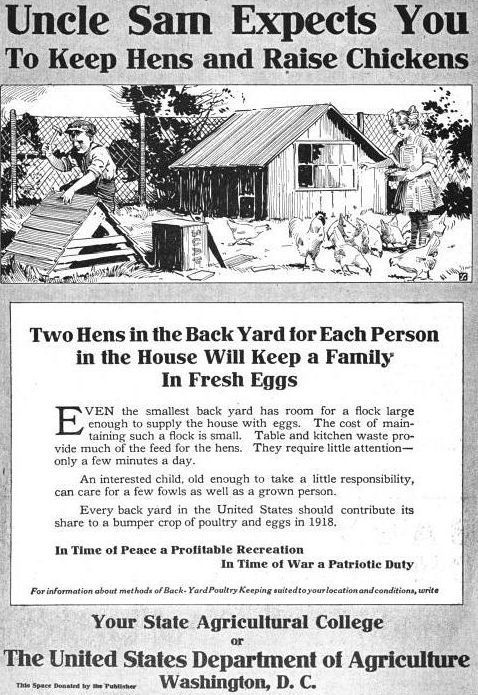
Back in 1918, the United States was in the thick of World War I, and every effort was geared towards supporting the war. Amidst the call to arms came a call to wings—chicken wings, that is. A vintage poster from that era urged Americans to keep hens and raise chickens as both a “profitable recreation” in peacetime and a “patriotic duty” in wartime. Quite the bird-brained idea, right?
The poster breaks it down beautifully. With just two hens in the backyard for each person in the house, families could keep themselves in fresh eggs. Even the smallest backyard had room for a flock large enough to supply the household with eggs. The cost of maintaining such a flock was minimal, as table and kitchen waste provided much of the feed for the hens. Plus, chickens required little attention—only a few minutes a day. Even children, old enough to take a little responsibility, could care for a few fowls as well as adults.
It’s an approach that’s surprisingly relevant even today. Raising chickens in your backyard not only gives you a steady supply of fresh eggs, but it also reduces food waste and encourages self-sufficiency. Plus, there’s something incredibly satisfying about collecting eggs from your very own hens.
The Community Impact
Back then, Uncle Sam’s poultry push was about more than just fresh eggs. It was about building resilience and self-reliance within communities. By encouraging families to raise chickens, the government aimed to ensure a bumper crop of poultry and eggs, thereby bolstering food security during uncertain times. This grassroots movement was a way to unite communities around a common cause and make sure everyone had access to essential food resources.
Families who raised chickens were contributing to the war effort in a very tangible way. They were reducing the strain on commercial food supplies, freeing up resources for the troops overseas. It was a practical, hands-on way for everyday Americans to support the war effort and take responsibility for their own food security.
Modern-Day Relevance
Fast forward to today, and the idea of raising backyard chickens is experiencing a renaissance. With growing awareness of the benefits of local food production and the environmental impact of large-scale farming, more and more people are turning to backyard poultry as a sustainable solution. It’s a small step towards greater food independence and a more resilient food system.
In a time where food security and sustainability are top of mind, the wisdom of Uncle Sam’s 1918 call to keep hens and raise chickens rings truer than ever. It’s about connecting with our food, reducing waste, and fostering a sense of community. Raising chickens today means fresh eggs, natural pest control, and a closer connection to the food we eat. It’s a practice that supports local economies and reduces the environmental footprint of our food system.
However, today the government seems to want the exact opposite. They have put so many regulations and laws in place that owning chickens has gotten difficult. From zoning restrictions to health codes, the hurdles for aspiring backyard farmers are higher than ever. These regulations often require expensive permits, limit the number of chickens you can keep, and impose strict guidelines on coop construction and maintenance.
The Regulatory Riddle
Why has owning chickens become so regulated? Some argue that it’s about protecting public health and preventing nuisances in densely populated areas. But these regulations can often feel excessive and discouraging, especially for those trying to embrace sustainable living practices. It’s a far cry from the days when Uncle Sam encouraged every household to keep a few hens.
A Call to Action
So, what do you think? Is it time to heed Uncle Sam’s advice and start your own backyard poultry project, despite the regulations? Let’s keep the conversation going and explore the possibilities together. After all, a little clucking might just be the key to a healthier, more sustainable future.
Whether you’re a seasoned farmer or a city dweller with a patch of grass, raising chickens can be a rewarding and impactful endeavor. It’s a way to take control of your food supply, reduce waste, and contribute to a more sustainable world.
Until next time,
Traci
