
At Huckleberry Farms, we take pride in offering fresh, nutritious eggs while keeping our prices fair for customers and sustainable for our farm. As we head into 2025, we want to be transparent about the factors that go into determining our prices and to announce a small price increase for the coming year.
Starting on January 1, 2025, our egg prices will be increasing by $1 per dozen:
- Chicken eggs will be $5 per dozen.
- Duck eggs will be $6 per dozen.
- Hatching eggs will also increase:
- Chicken hatching eggs: $15 per dozen.
- Duck hatching eggs: $20 per dozen.
- Goose hatching eggs (pending confirmation of our gander): $25 per dozen.
While raising prices is never easy, it’s necessary to ensure we can continue to care for our birds, maintain the farm, and provide the quality products our customers have come to rely on.
How We Determine Our Prices
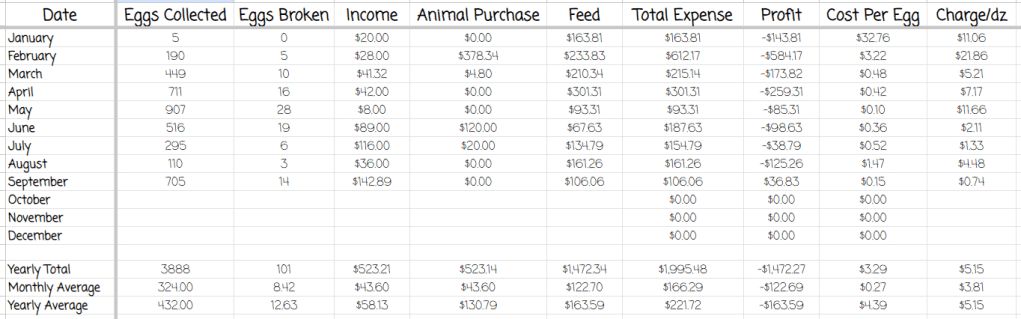
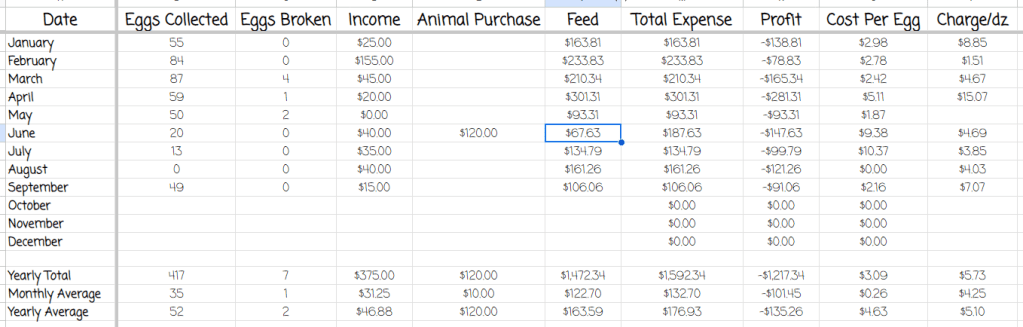
We use a detailed system to calculate our prices, based on the actual costs of running the farm. With the help of Google Sheets, we track every aspect of our flocks’ productivity and the costs associated with keeping them healthy and productive. Here’s how it works:
- Egg Production Tracking
Each month, we record the number of eggs laid by each flock (chickens, ducks, and potentially geese). We also track how many eggs are damaged or broken during collection. This gives us an accurate count of the eggs available for sale. - Income and Expenses
We record the total monthly income from each flock, along with all expenses. These expenses include:
- Animal acquisition: Costs of purchasing new birds.
- Feed: The cost of high-quality feed for each flock.
- Bedding: The materials we use for deep bedding to ensure clean, comfortable living conditions for the birds.
- Repairs: Any maintenance or repairs to coops and equipment.
- Electricity: Costs of running heat lamps, waterers, and lights during colder months.
- Equipment: Feeders, waterers, and other tools necessary for daily farm operations.
- Miscellaneous: Any other unforeseen costs.
- Non-production expenses: Costs associated with the farm that aren’t directly tied to production (marketing, transportation, etc.).
- Cost Per Egg
We then divide the total monthly expenses by the number of eggs laid. This gives us the cost of each individual egg. - Setting the Price
To determine the amount we charge per dozen, we take into account a 35% profit margin. This margin covers:
- Labor: The time spent caring for the birds, collecting eggs, maintaining equipment, and more.
- Unaccounted-for expenses: Emergencies, unexpected repairs, or fluctuating feed costs. We calculate the price using both monthly and yearly averages. This way, we get a clear picture of how the farm is performing throughout the year. While production and demand fluctuate seasonally, we prefer to set a consistent yearly price. This means that in some months, we may take a loss, while in others, we see more profit. We believe this approach helps keep our products accessible and affordable year-round, even during slower months.
- A Balance Between Fairness and Sustainability
Our goal is not to price gouge or make a fortune off our customers. Instead, we aim to find a balance between covering our costs, paying ourselves a fair wage, and keeping nutritious food available to as many people as possible. We are committed to supporting our local community with wholesome, ethically raised food, even when it means absorbing some of the costs during tougher months.
Why We’re Raising Prices in 2025
Like many farms, we’ve seen rising costs for feed, bedding, and equipment. The price increase for 2025 will help us keep up with these higher expenses while ensuring we can continue to provide high-quality care for our birds and maintain sustainable farming practices.
Our hens, ducks, and (hopefully) geese are more than just egg-layers to us—they are an integral part of our farm’s ecosystem. They play a key role in soil health, pest control, and sustainable land management. By setting fair prices that cover our costs, we can continue to care for them in a way that respects their natural behaviors and supports regenerative farming.
Thank You for Your Support
We are incredibly grateful for the support we’ve received from our community over the years. Your trust in our farm and your choice to buy local means the world to us. We are committed to being transparent about our pricing and our farm practices, so you know exactly what goes into every dozen eggs you buy.
We hope that this small price increase will be understood as a necessary step in maintaining the quality and sustainability of Huckleberry Farms. We’re looking forward to continuing to provide you with fresh, wholesome eggs and to growing together as a community in the coming year.
Thank you for supporting local, sustainable farming!
