
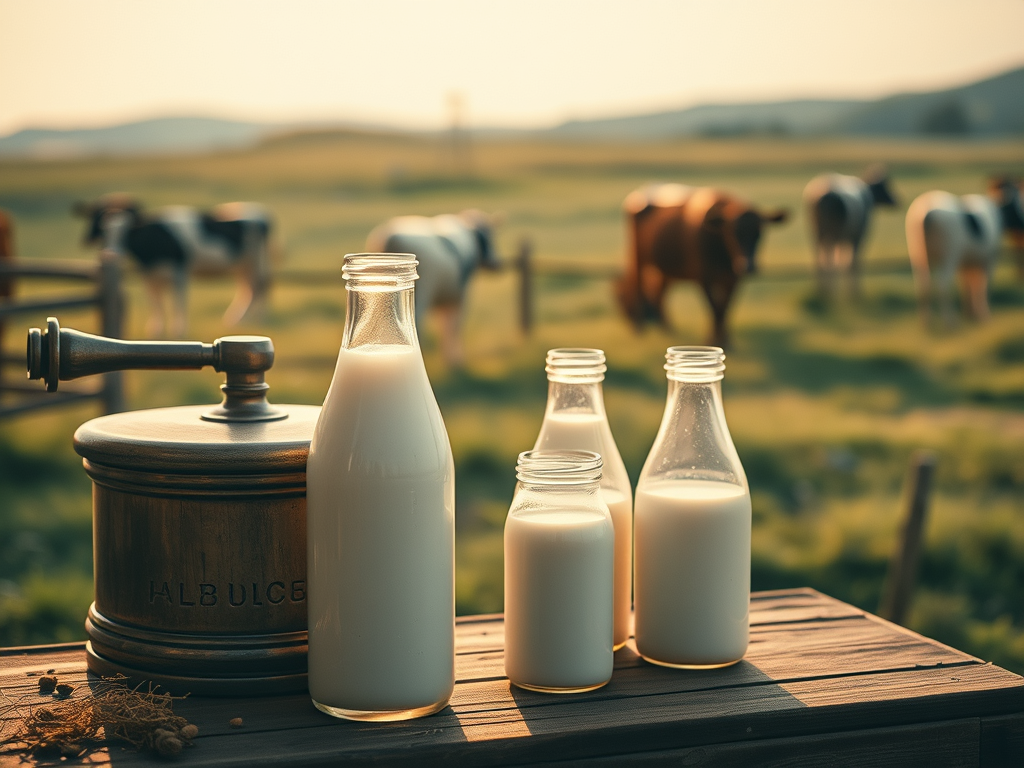
Raw milk has been a staple in human diets for thousands of years, long before the concept of pasteurization entered the picture. For most of history, milk was consumed directly from the animal—rich in nutrients, enzymes, and probiotics. But like many aspects of food production, the Industrial Revolution brought significant changes to dairy farming that had far-reaching consequences, not only for milk itself but also for public health. This article delves into the fascinating history of raw milk, the impact of the Industrial Revolution on dairy practices, and the ripple effects that continue to shape modern food systems.
Early History of Raw Milk
Raw milk, in its natural state, was one of the earliest food sources for humans after we domesticated animals like goats, sheep, and cows. This practice dates back to around 9,000 years ago in the Fertile Crescent, where agriculture and animal husbandry began to take root. For centuries, small, self-sustaining farms dotted the countryside, and families relied on their livestock for fresh milk, cheese, butter, and yogurt.
Milk, a highly perishable product, was consumed quickly or preserved through fermentation into yogurt and cheese. The production and consumption of raw milk were part of a localized food system, where farmers and consumers were often one and the same, or neighbors at most. Without refrigeration, the close proximity of the consumer to the source of the milk meant that it didn’t need to travel far. Milk in its raw form was revered for its health benefits, with fresh milk seen as nourishing and healing.

The Rise of Industrialization and Urbanization
Fast forward to the 18th and 19th centuries—two key developments would drastically change the way milk was produced and consumed: the Industrial Revolution and the rapid urbanization of cities. As factories grew and populations concentrated in urban areas, the traditional small farms that had sustained rural communities for centuries began to decline. Urbanization created a disconnect between food producers and consumers, resulting in a series of challenges in food production, safety, and transportation.
By the early 1800s, cities like New York and Philadelphia were rapidly expanding, and the demand for fresh milk outpaced the ability of nearby farms to meet it. The growing population in urban centers led to increased reliance on industrial food production, and milk was no exception. However, without refrigeration, this posed a major problem. Fresh milk couldn’t be transported over long distances without spoiling, and the urban poor lacked easy access to local farms.
Breweries and “Swill Milk”
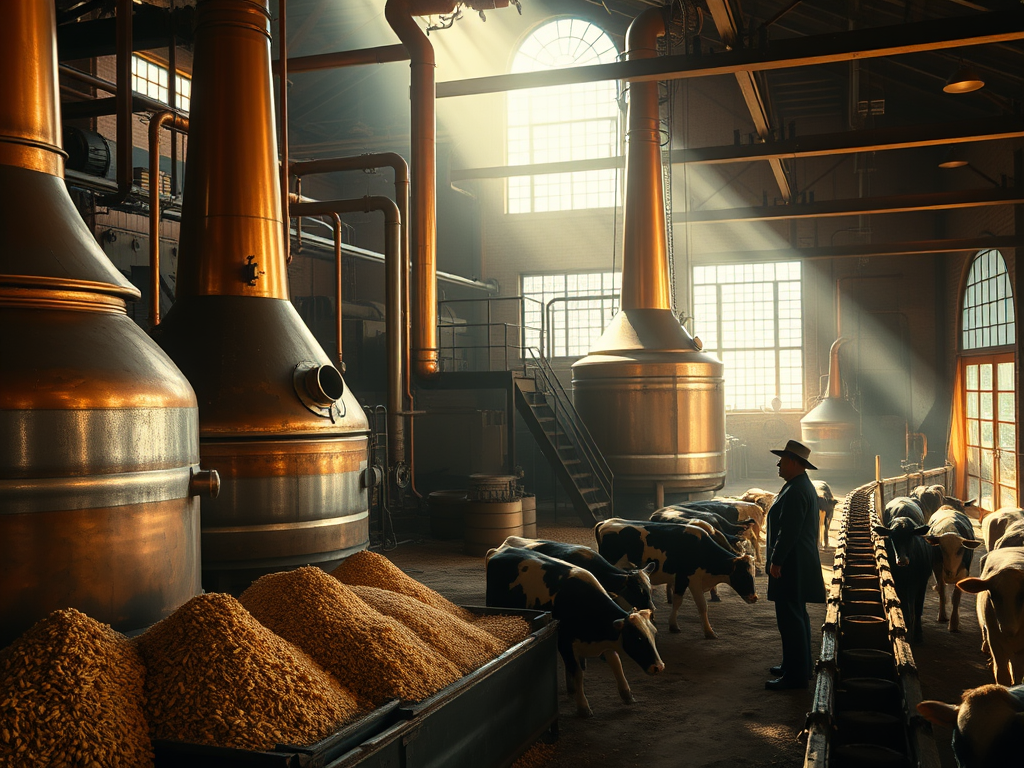
In a fascinating turn of events, the breweries that sprang up in these industrial cities became central to the dairy problem. In the early 19th century, the brewing industry was booming, and one of the main byproducts of beer production was spent distiller’s grains. These distillery byproducts, rich in carbohydrates but low in essential nutrients for cows, were an abundant source of cheap feed for livestock. In an effort to cut costs, city-based dairies began locating their operations next to breweries. Cows were fed this “swill” or distillery waste as their primary food source, leading to the rise of what became known as “swill dairies.”
The problem was that feeding cows a diet primarily made up of these grains altered the pH of the rumen (the cow’s primary digestive chamber), making it more acidic. This shift in pH had several detrimental effects on the cows’ health, causing a host of digestive and metabolic issues. Cows became malnourished, developed sores, and produced poor-quality milk that was often watery, discolored, and contaminated.
To make matters worse, these cows were often kept in filthy, overcrowded conditions, with little access to sunlight or fresh pasture. Manure buildup, a byproduct of these urban dairies, became a breeding ground for harmful pathogens. Without modern sanitation or waste disposal methods, these swill dairies created the perfect environment for diseases to flourish.
The Health Crisis of “Swill Milk”
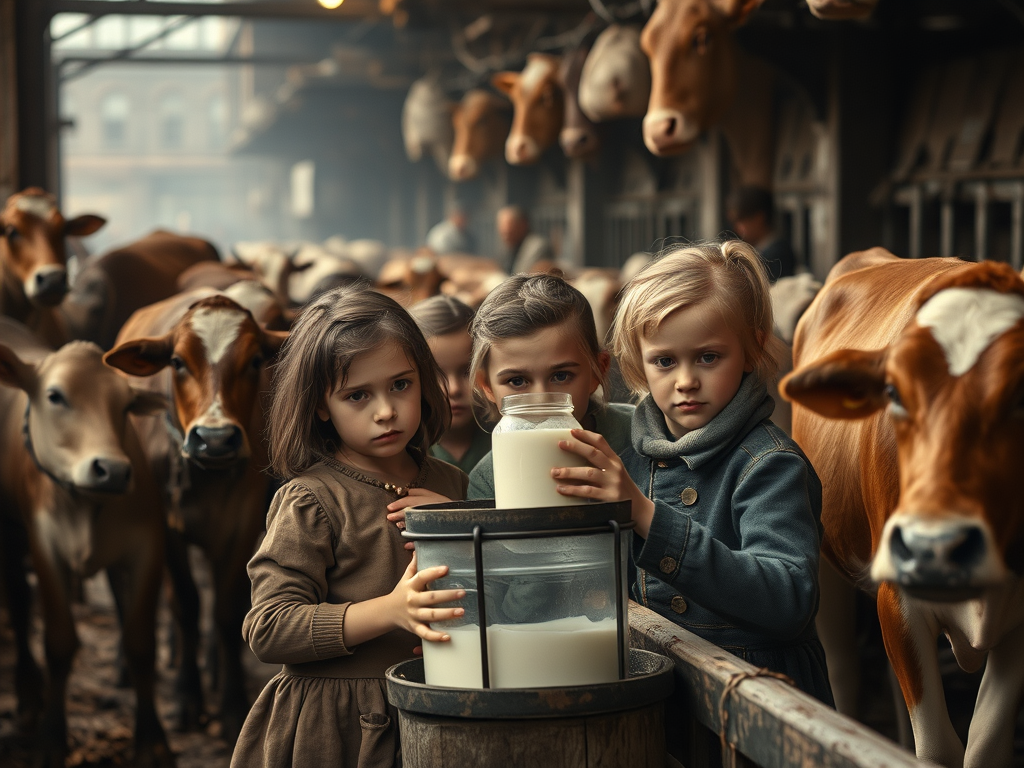
The poor conditions in urban dairies, combined with the low-quality feed and the overall decline in cow health, soon led to a public health crisis. The milk produced by these dairies, often referred to as “swill milk,” was tainted with bacteria, leading to outbreaks of diseases such as tuberculosis, typhoid fever, and infant mortality. At the time, milk was a staple food for children and infants, who were particularly vulnerable to these diseases.
The impact of the tainted milk was devastating. By the mid-19th century, infant mortality rates in major cities like New York were soaring, with contaminated milk identified as a leading cause. To make matters worse, unscrupulous dairy owners would sometimes mix the spoiled milk with additives like chalk, plaster, or flour to make it appear thicker and whiter, further compounding the health risks. These practices made “swill milk” one of the most infamous food scandals of the time.
The Call for Reform: Pasteurization and Regulation
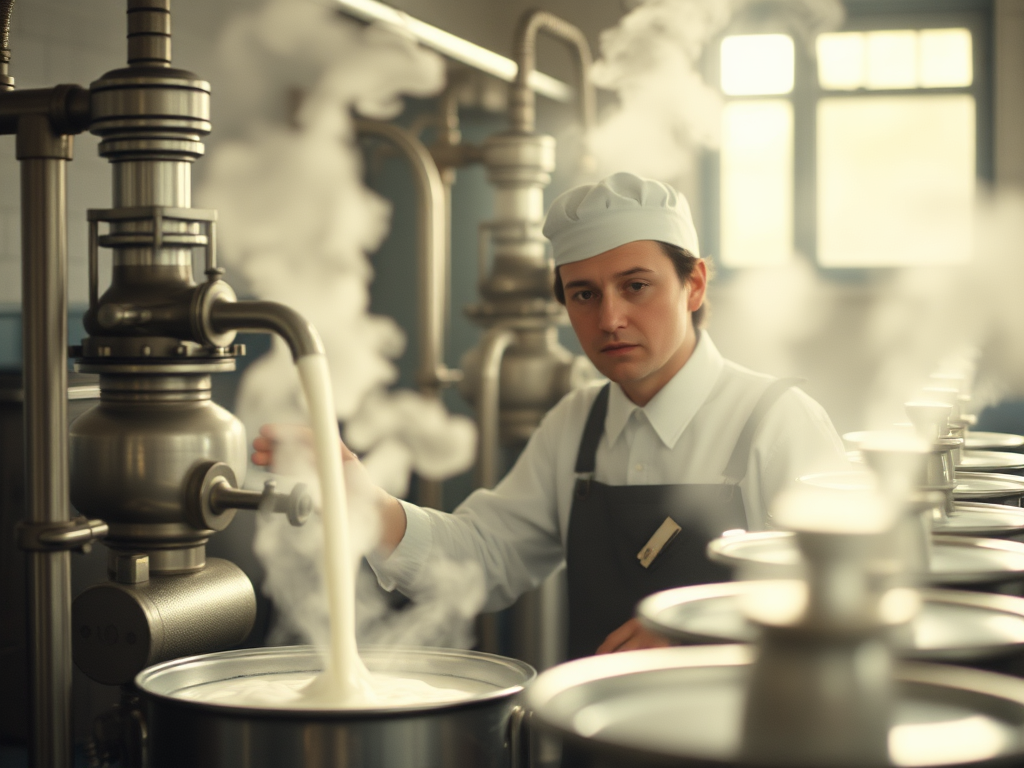
The rise of public health concerns surrounding milk quality eventually led to a push for reform. By the late 19th century, scientists like Louis Pasteur were investigating the link between bacteria and disease. Pasteur’s research in the 1860s showed that heating liquids like milk to a specific temperature for a set period of time could kill harmful bacteria. This process, known as pasteurization, became the cornerstone of food safety reforms in the early 20th century.
By the early 1900s, there was growing pressure to improve the safety of the milk supply. Reformers advocated for stricter regulation of dairy practices and the widespread adoption of pasteurization. In cities like New York, pasteurization laws were enacted to protect public health, and dairies were forced to adopt cleaner, more sanitary practices. The modern dairy industry was born.
However, while pasteurization helped reduce the spread of disease, it also marked a significant shift away from traditional, raw milk practices. Raw milk—once a staple of local food systems—was now seen as a potential health hazard in industrialized cities.
Local Food Systems Before Refrigeration
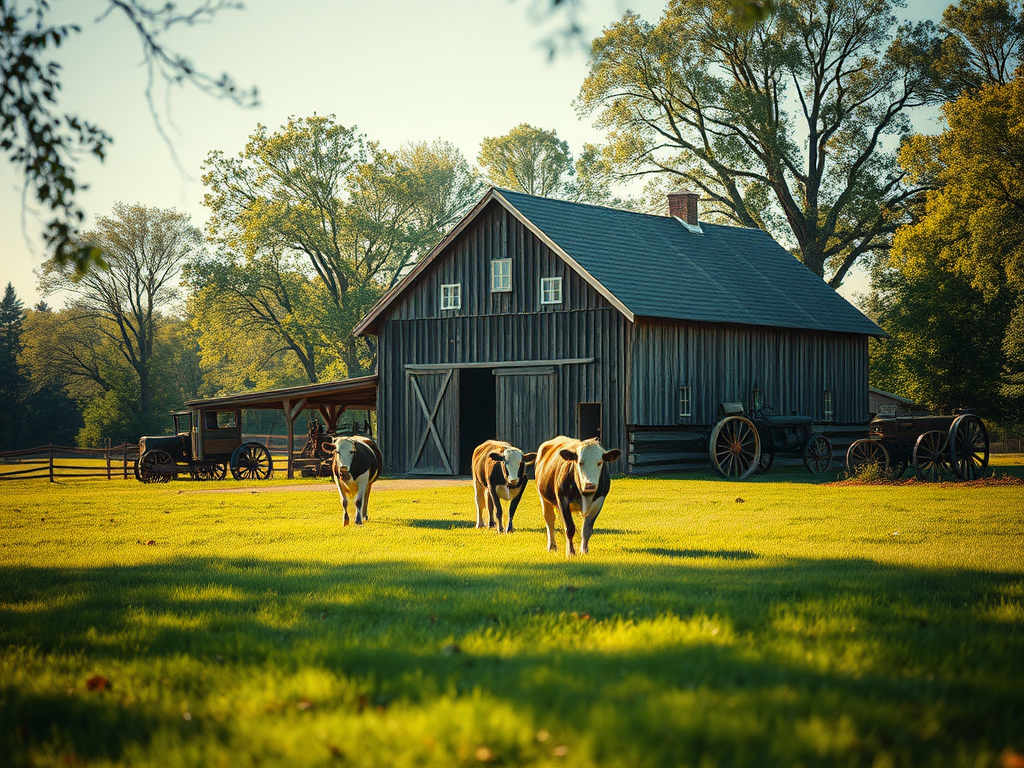
In the early 20th century, food systems were still largely local, with most dairy farms located near their consumers. Before the widespread availability of refrigeration and refrigerated trucks, milk had to be consumed quickly after it was produced. There was no electricity to keep milk cool, so transportation was limited, and dairy farms were often small, family-run operations serving their immediate communities.
Despite the introduction of pasteurization, many rural families continued to drink raw milk from their own cows, confident in the health and cleanliness of their animals. In these settings, raw milk remained a vital, nutritious part of the diet. It was only in the growing cities, with their overcrowded swill dairies, that milk contamination became a major problem.
The Industrialization of Dairy: Refrigeration and Large-Scale Production
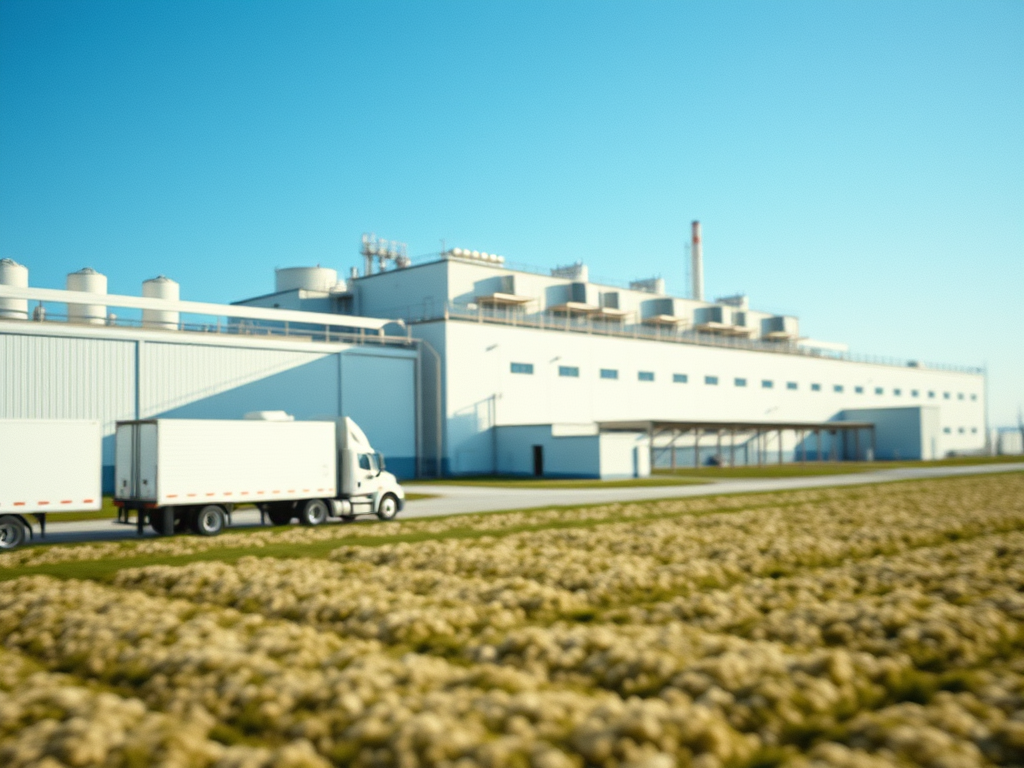
The advent of refrigeration in the mid-20th century allowed for the mass production and distribution of milk over long distances, further disconnecting consumers from the source of their food. The introduction of refrigerated trucks enabled large dairy operations to transport milk across the country, contributing to the rise of corporate dairy farming.
As dairy production became more industrialized, small family farms struggled to compete with the efficiencies and scale of large corporate dairies. This shift towards industrial agriculture brought significant changes to how cows were raised and milk was produced. Herds grew larger, cows were confined to indoor facilities, and the focus shifted to maximizing production at the lowest possible cost.
With pasteurization now the norm, and raw milk increasingly regulated or outright banned in many states, the local, small-scale dairies that once dominated the landscape became a rarity. In the industrial food system, milk became just another commodity, far removed from the traditions of small-scale, raw milk production that had sustained communities for generations.
The Raw Milk Movement Today
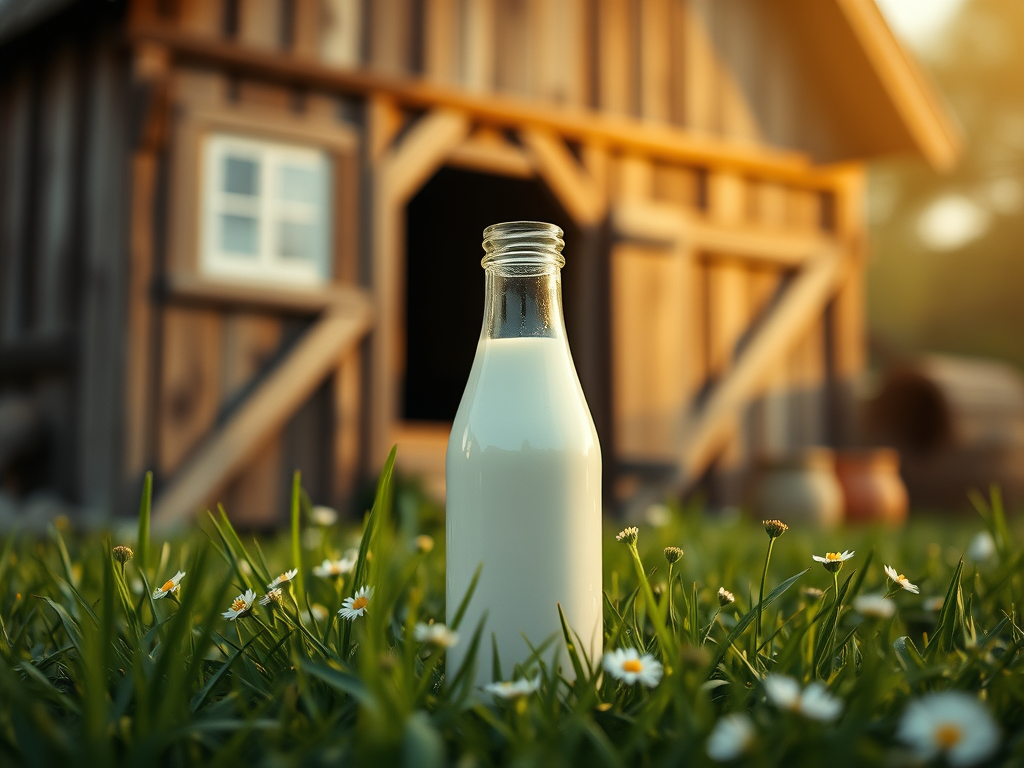
Despite the dominance of pasteurized milk in modern food systems, a growing number of consumers are returning to raw milk as part of a broader movement towards local, sustainable, and traditional food practices. Proponents of raw milk argue that pasteurization, while effective at killing harmful bacteria, also destroys beneficial enzymes, probiotics, and nutrients found in raw milk. They believe that when produced on clean, small-scale farms, raw milk can be safe, nutritious, and a powerful part of a healthy diet.
The raw milk movement emphasizes transparency, trust, and a direct relationship between farmers and consumers—values that echo the practices of pre-industrial dairy farming. For those who drink raw milk today, it’s not just about the milk itself, but about supporting small farmers, preserving traditional foodways, and rejecting the industrial food system that has dominated for over a century.
Conclusion: A Return to Tradition?
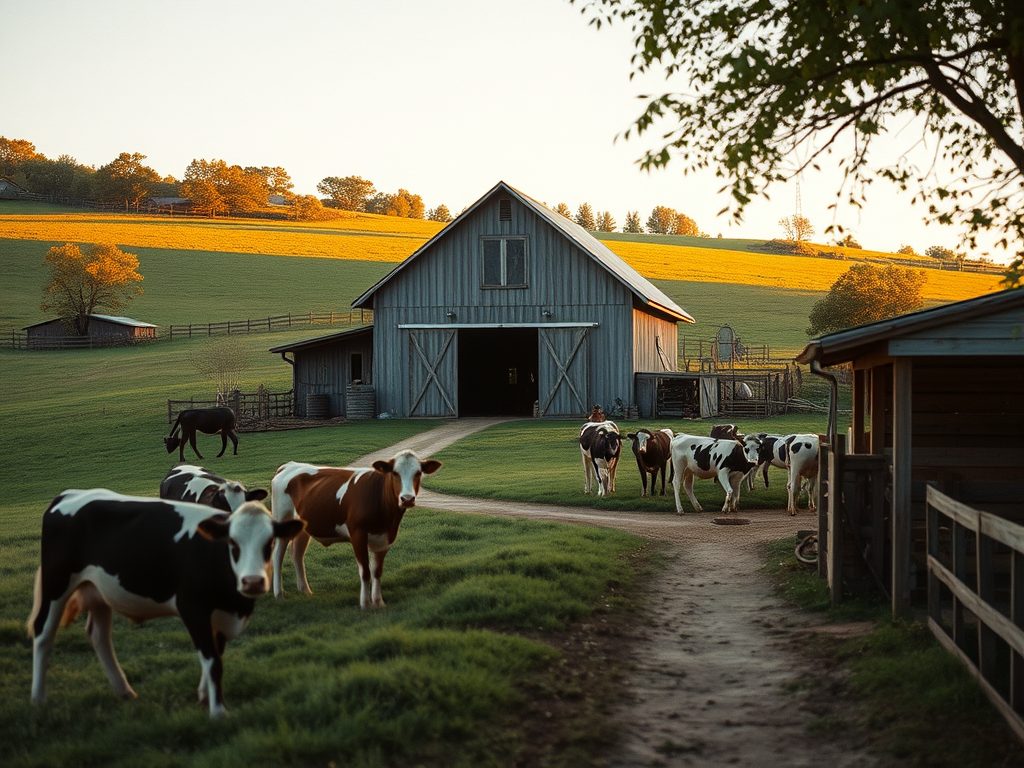
The history of raw milk is deeply intertwined with the rise of industrialization, urbanization, and public health reforms. While pasteurization helped solve the immediate crisis of contaminated milk in cities, it also contributed to the broader industrialization of our food system. Today, as consumers become more aware of the problems associated with industrial agriculture, many are seeking out raw milk and other local, traditional foods as a way to reconnect with the land and take control of their health.
The lessons of the past—particularly the devastating consequences of the “swill dairies”—serve as a reminder of the importance of sustainable, ethical farming practices. As we move forward, there is much to learn from the history of raw milk and the role it played in shaping our modern food systems. Whether through small-scale dairies, raw milk co-ops, or a renewed emphasis on local food, the legacy of raw milk continues to influence the way we think about food, health, and sustainability.
