
While ethical and environmental reasons often draw people to pastured products, there’s an equally compelling factor that solidifies their choice: taste. Pastured poultry and rabbit meat aren’t just better for the planet and the animals; they are a genuine treat for the palate. Let’s delve into the unique flavor profile of these products and share some culinary insights that make them shine in any kitchen.
Rich and Distinct Flavor
The diet and lifestyle of pastured animals play a significant role in the taste of their meat:
- Diverse Diet: Pastured animals have the privilege of grazing on a diverse range of vegetation, from lush grasses to wild herbs and flowers. Additionally, they supplement their diet with insects and other natural forage, adding depth and complexity to the flavors of their meat. This varied diet imparts unique nuances and subtle undertones to the meat, resulting in a rich and distinct flavor profile that is unparalleled.
- Active Lifestyle: Pastured animals lead active lives, freely roaming and grazing on open pastureland. This natural behavior not only promotes physical health but also contributes to the development of flavorful meat. The constant movement and exercise result in well-toned muscles and leaner cuts of meat. As a result, pastured meat tends to be firmer in texture and boasts a more robust flavor compared to conventionally raised counterparts. By embracing an active lifestyle, pastured animals produce meat that reflects their vitality and vigor, offering consumers a truly authentic and satisfying culinary experience.
Superior Texture
- Natural Growth: Pastured animals grow at their own pace, free from the constraints of confinement and artificial growth hormones. This natural development allows for the organic and consistent formation of muscle tissue, resulting in meat that is tender yet firm. Without the stress and pressure of intensive farming practices, pastured animals produce meat with a texture that is unparalleled in its naturalness and quality.
- Healthy Fat Distribution: Pastured animals typically exhibit a balanced distribution of fat throughout their muscle tissue. This balanced fat-to-meat ratio not only enhances the flavor of the meat but also contributes to its juiciness and succulence when cooked. The presence of healthy fats interspersed within the muscle fibers helps to lock in moisture during cooking, preventing the meat from drying out and ensuring a moist and flavorful dining experience. By prioritizing the well-being and natural growth of the animals, pastured farming practices yield meat with a superior texture that is appreciated by discerning consumers for its tenderness, juiciness, and overall quality.
Nutritional Benefits Enhance Taste
- Omega-3 Fatty Acids: Pastured animals raised on a natural diet rich in grasses and forage tend to have higher levels of omega-3 fatty acids in their meat compared to conventionally raised counterparts. These beneficial fats not only promote heart health and overall well-being but also impart a richer taste and depth of flavor to the meat. Omega-3 fatty acids are known for their ability to enhance the savory notes of meat, resulting in a more complex and satisfying culinary experience for consumers.
- Vitamin-Rich: The natural, varied diet of pastured animals ensures that their meat is packed with essential vitamins and nutrients. From vitamin A to vitamin E, pastured meat is often higher in a wide range of vitamins compared to meat from animals raised in confinement. These vitamins subtly influence the taste and aroma of the meat, adding layers of complexity and depth to its flavor profile. By incorporating nutrient-rich pastured meat into their diets, consumers not only enjoy delicious meals but also reap the nutritional benefits of these wholesome and nourishing foods.
Cooking Tips for Pastured Poultry and Rabbit Meat
a) Low and Slow:
- Given the lean nature of pastured meat, it’s best cooked using low and slow methods to preserve its tenderness and juiciness. Consider techniques like slow roasting, braising, or stewing, which allow the meat to gently tenderize and develop rich flavors over time. This gradual cooking process ensures that the meat remains moist and succulent, resulting in a melt-in-your-mouth texture that’s sure to impress.
b) Simple Seasonings:
- Pastured meat boasts natural flavors that shine on their own, so there’s no need for complex seasonings. Keep it simple with a sprinkle of high-quality salt, a dash of freshly ground pepper, and perhaps some aromatic herbs to complement the meat’s inherent taste. By letting the meat’s natural flavors take center stage, you’ll create dishes that are both delicious and satisfying without overpowering the palate.
c) Rest After Cooking:
- After cooking your pastured poultry or rabbit meat, allow it to rest before serving. This crucial step allows the juices to redistribute throughout the meat, ensuring that each bite is moist, tender, and bursting with flavor. Simply cover the cooked meat loosely with foil and let it rest for a few minutes before slicing or serving. This short resting period enhances the overall eating experience, ensuring that your meal is as enjoyable and flavorful as possible.
Favorite Recipes

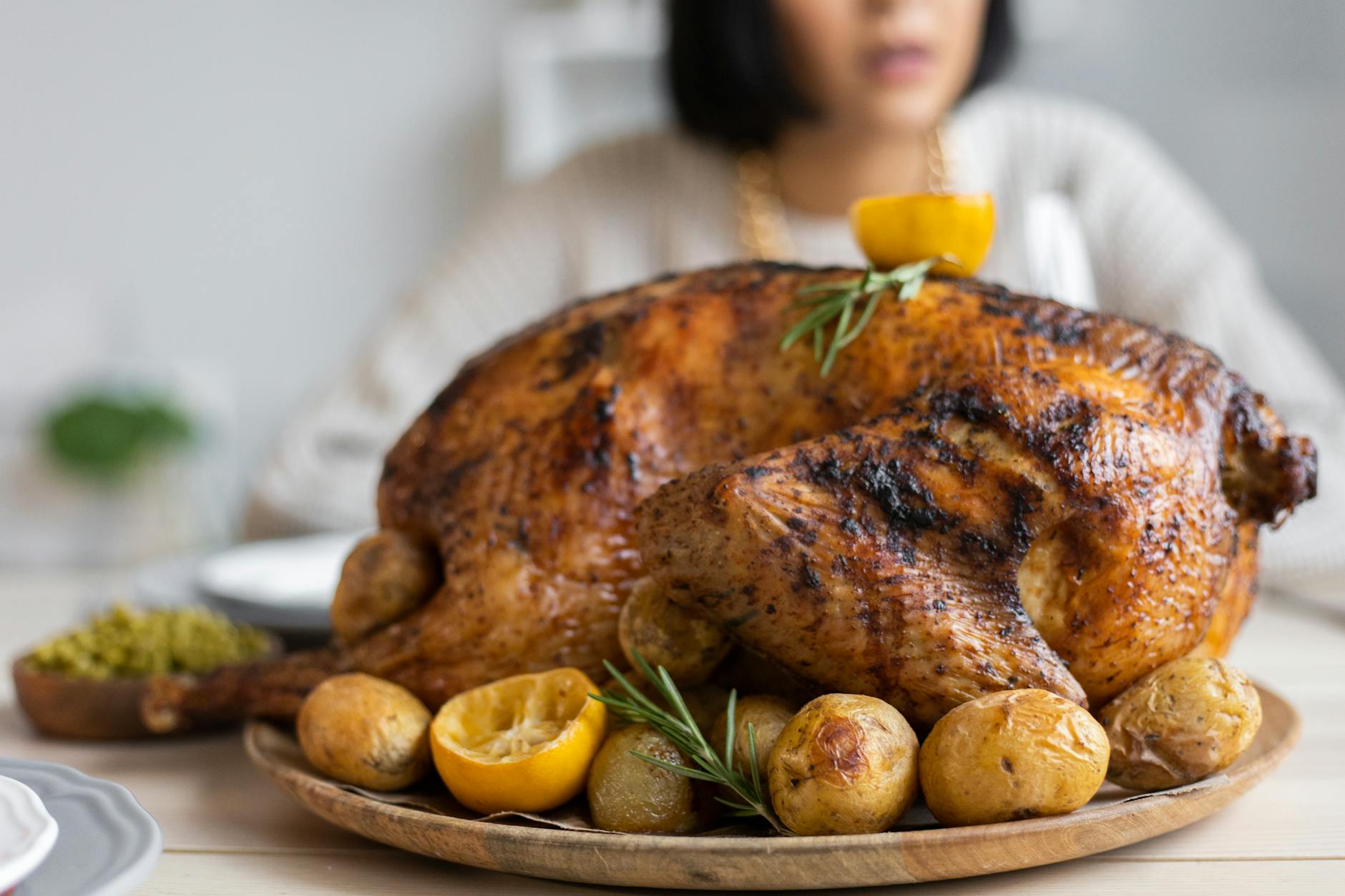
Herb Roasted Pastured Chicken
Ingredients:
- 1 whole pastured chicken
- 2 tablespoons fresh rosemary, chopped
- 2 tablespoons fresh thyme leaves
- 4 cloves garlic, minced
- Zest of 1 lemon
- Salt, to taste
- Pepper, to taste
Instructions:
- Preheat your oven to 375°F (190°C).
- Rinse the pastured chicken under cold water and pat dry with paper towels.
- In a small bowl, mix together the chopped rosemary, thyme leaves, minced garlic, lemon zest, salt, and pepper.
- Rub the herb mixture evenly over the surface of the chicken, making sure to coat it thoroughly.
- Place the seasoned chicken on a roasting pan or baking dish, breast side up.
- Roast the chicken in the preheated oven for approximately 1 hour and 15 minutes to 1 hour and 30 minutes, or until the internal temperature reaches 165°F (74°C) and the juices run clear when pierced with a knife.
- Once cooked, remove the chicken from the oven and let it rest for about 10 minutes before carving.
- Carve the roasted pastured chicken into desired portions and serve hot, garnished with fresh herbs if desired.
- Enjoy your herb roasted pastured chicken with your favorite side dishes for a delicious and wholesome meal.

Braised Rabbit with White Wine and Mushrooms
Ingredients:
- 1 rabbit, cut into pieces
- 2 tablespoons olive oil
- Salt and pepper, to taste
- 1 cup white wine
- 4 cloves garlic, minced
- 1 onion, diced
- 8 ounces mushrooms, sliced
Instructions:
- Heat the olive oil in a large skillet or Dutch oven over medium-high heat.
- Season the rabbit pieces with salt and pepper, then add them to the hot skillet.
- Sear the rabbit pieces on all sides until golden brown, about 3-4 minutes per side. Remove from the skillet and set aside.
- In the same skillet, add the minced garlic and diced onion. Cook until softened and fragrant, about 2-3 minutes.
- Add the sliced mushrooms to the skillet and cook until they release their juices and begin to brown, about 5-6 minutes.
- Return the seared rabbit pieces to the skillet, nestling them among the mushrooms.
- Pour in the white wine, scraping the bottom of the skillet to deglaze and release any browned bits.
- Bring the mixture to a simmer, then reduce the heat to low.
- Cover the skillet or Dutch oven and let the rabbit braise gently in the white wine mixture for 45-60 minutes, or until the meat is tender and cooked through.
- Once done, remove the rabbit pieces from the skillet and transfer to a serving platter.
- Spoon the mushroom and white wine sauce over the rabbit pieces.
- Serve the braised rabbit hot, accompanied by your favorite side dishes, and enjoy the succulent, rich flavors of this dish.
Embrace the Flavorful World of Pastured Meats
Choosing pastured products isn’t just an ethical or environmental decision; it’s a culinary one. The unmistakable taste and quality of pastured poultry and rabbit meat elevate everyday meals into gourmet experiences. For those who genuinely savor their food, understanding the source and savoring the superior flavor profile of pastured products makes every bite a delightful journey of taste and tradition.
Enjoying this recipe? Find more like it in the Huckleberry Homestead Cookbook—available now!
