
Eat Local. Live Wholesome. Cherish Traditions.
A Comprehensive Exploration of Principles, Benefits, and Practical Implementation
Grazing management practices play a pivotal role in shaping the health of pasturelands and their symbiotic relationship with the environment. In this article, we delve into the principles and benefits of intensive rotational mob grazing, shedding light on its positive impacts on livestock health, land productivity, and the environment. We’ll also provide practical tips for implementing this system on both small and large scales.
Introduction to Intensive Rotational Mob Grazing
Intensive rotational grazing involves dividing large grasslands into smaller paddocks, shifting animals more frequently based on herbage data. This system leads to higher pasture productivity per hectare (~2.471 acres), better control of weeds, even distribution of manure, healthier soil, and allows paddocks to rest and rejuvenate effectively.
Environmental Benefits of Managed Grazing
Environmental Benefits:
Managed grazing, especially intensive rotational grazing, offers significant environmental benefits, contributing to the overall health and resilience of the ecosystem (Pasture.io).
These practices, such as enhanced soil water retention, reduced rain runoff, improved water quality, even distribution of manure, and decreased soil erosion and irrigation needs, make a substantial positive impact on the environment.
The soils’ improved water-holding capacity leads to less rain runoff, resulting in enhanced water quality as forages trap nutrients and sediment. The even spread of manure across paddocks and the distribution of animal waste further contribute to reduced soil erosion and irrigation needs, making managed grazing a sustainable and environmentally beneficial farming practice.
Livestock Health and Farmer-Livestock Relationships:
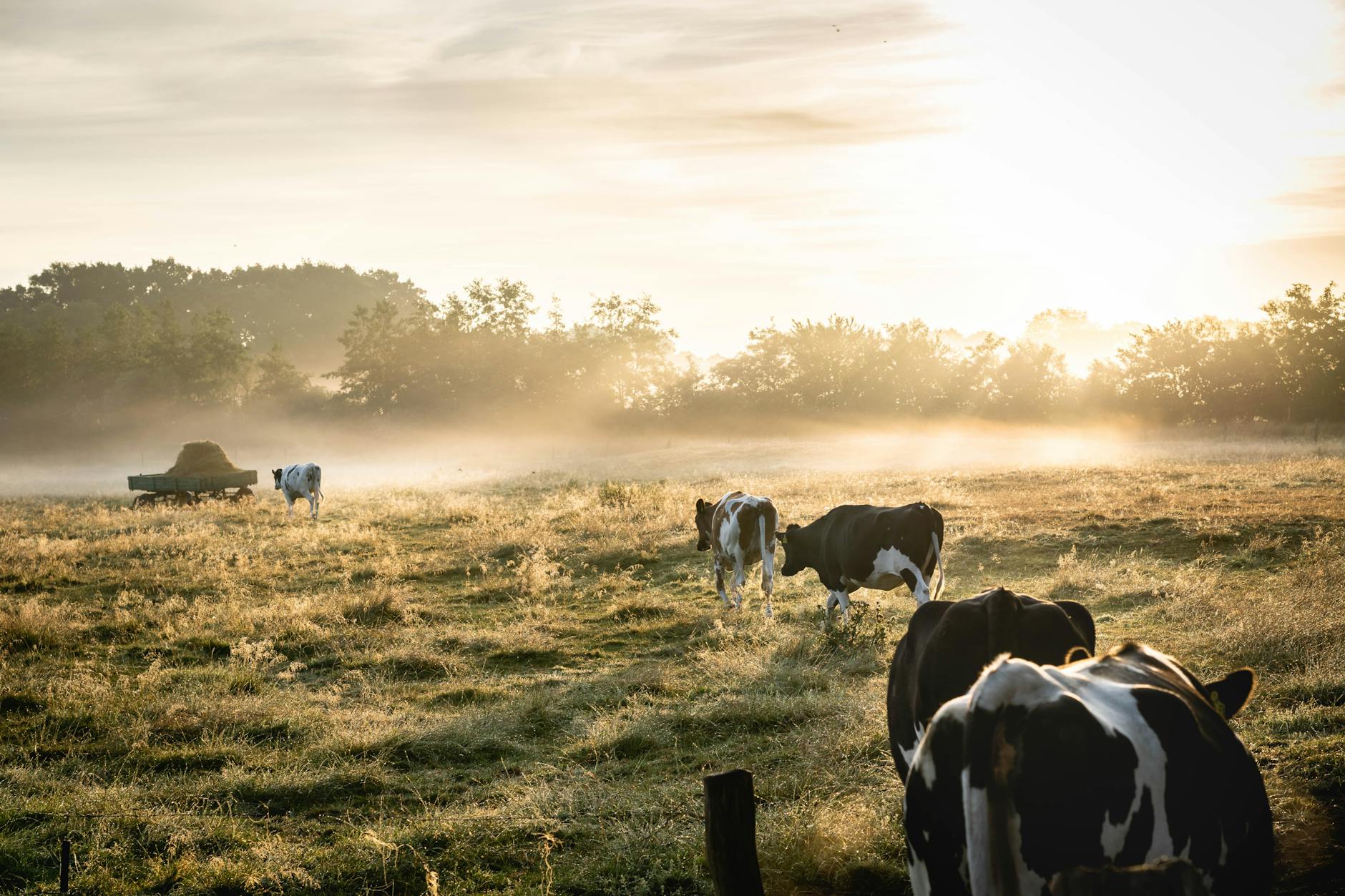
Cows engaging in intensive rotational grazing experience improved overall health, lower somatic cell counts, and fewer foot and hoof problems due to increased movement and a well-managed grazing routine (Pasture.io). This system not only benefits the health of livestock but also enhances the relationship between farmers and their animals.
The increased frequency of movement associated with rotational grazing reduces the likelihood of foot and hoof problems. As livestock are regularly shifted between paddocks, they engage in more walking, promoting healthier hooves and limbs. Additionally, this mobility contributes to higher calving percentages, reflecting improved reproductive health among grazing animals. Moreover, fewer parasite and fly problems are reported, highlighting the positive impact of intensive rotational grazing on the immune system and general health of the animals, ultimately fostering a healthier livestock population.
Farmers who adopt intensive rotational grazing methods often find that their relationship with livestock improves significantly. The flexible and dynamic nature of rotational grazing systems allows for easy movement of animals between paddocks, enabling livestock to quickly adapt to the new grazing routine. This ease of management contributes to laid-back and happier livestock. The positive impact on animal behavior extends to reduced stress levels, benefiting both the animals and the farmers. The adaptability of livestock to the rotational grazing routine fosters a harmonious environment, creating a positive feedback loop where content and well-managed animals contribute to the overall success and sustainability of the farming operation.
Optimizing Pasture Management: Rotational Stocking Systems
Implementing a rotational stocking system is crucial for promoting regrowth and climate adaptation in pastures. This approach provides essential rest periods, enhancing forage yield and animal productivity compared to continuous stocking. Additionally, rotational stocking enriches soil structure, cover, and organic matter, benefiting both the environment and livestock. The calculated determination of paddock size based on forage supply, animal demand, and livestock weight is essential for effective rotational grazing in Management-intensive Grazing (MiG) systems, contributing to the overall success of sustainable agricultural practices (USDA Climate Hubs).
Grazing ecosystems, vital for the livelihoods of over one billion people worldwide, play a crucial role in supporting human well-being and providing diverse ecosystem services. However, conventional agricultural practices, including continuous grazing and industrial inorganic input methods, have led to negative environmental impacts such as soil erosion, carbon loss, and soil structure degradation. Adapting to climate trends is essential, and rotational stocking systems offer a solution by controlling the timing and intensity of grazing. This not only enhances forage yield and animal productivity per acre but also ensures essential rest periods for pastures, fostering regrowth and environmental health. The calculated determination of paddock size further contributes to the effectiveness of rotational grazing in MiG systems, aligning with sustainable agricultural practices.
Economic and Social Impact of Rotational Livestock Grazing
Rotational livestock grazing emerges as a transformative practice not only for mitigating climate change but also for fostering substantial social and economic benefits. Encompassing various sustainable approaches, such as Adaptive Multi-Paddock (AMP) grazing, rotational systems play a pivotal role in revitalizing ecosystems. Approximately 68 percent of the world’s agricultural lands, spanning eight billion acres, are dedicated to grazing, supporting over a billion people. (Leu, 2021) Unfortunately, many of these landscapes suffer degradation due to deforestation and inappropriate grazing practices.
AMP grazing, a successful method in weed management, enhances pasture productivity and biodiversity. By rotating livestock across smaller paddocks for short periods, this approach forces thorough grazing, promoting efficient pasture use. The higher stock density ensures weed control, manure distribution, and soil fertilization. Notably, AMP systems involve intense, short grazing periods, allowing for rapid recovery and significant improvements in soil health and fertility. Research indicates that these systems increase feed production per hectare, optimize rainfall utilization, and promote overall soil health.
Beyond environmental advantages, rotational grazing presents substantial economic benefits. While initial costs may be higher, long-term gains include healthier herds, reduced veterinary expenses, lower maintenance and fertilizer costs, and increased pasture productivity. A case study of Blue Mountain Farm in Pennsylvania demonstrated a 59 percent reduction in greenhouse gas emissions through the adoption of rotational grazing. (Environmental and Energy Study Institute (EESI), n.d.) Furthermore, these systems contribute to better control of internal parasites, enhancing livestock health.
The economic viability extends to diverse farming models, including the use of multiple species in succession. By incorporating chickens and geese in the grazing cycle, rotational systems not only enhance nutrient cycling but also manage pests and weeds effectively. Studies affirm that correctly managed pastures can build soil organic matter faster than many other agricultural systems, providing a promising solution for carbon sequestration. Regenerative grazing emerges as a powerful tool to reverse climate change, turning livestock production from a contributor to a solution. Numerous organizations worldwide are actively involved in scaling up regenerative grazing systems, offering a wealth of resources for those interested in adopting these transformative practices.
In-Depth Look at Management-Intensive Grazing (MiG)
Management-Intensive Grazing (MiG), introduced by grazing specialist Jim Gerrish, is a flexible approach to rotational grazing that balances animal nutrient demand with forage supply, ensuring the allocation of available forage based on animal requirements. In intensive, irrigated pasture systems, MiG promotes homogenous forage utilization, increased yield and quality, reduced soil compaction, and more evenly distributed manure and urine (Colorado State University Extension). The core principles of MiG, summarized by the FIO principle (minimizing frequency of plant defoliation, controlling intensity of plant defoliation, and allowing opportunity for plant growth/regrowth), aim to maximize productivity and utilization while safeguarding plant health for long-term pasture productivity (Colorado State University Extension).
Transformative Success of Adaptive Multi-Paddock (AMP) Grazing
Adaptive Multi-Paddock (AMP) grazing, involving short-duration grazing periods, adaptively varied post-grazing plant recovery periods, and adjustment of animal numbers based on environmental and economic conditions, has been successfully implemented by farmers globally (Teague & Kreuter, 2020). This innovative approach, championed by farmers worldwide, goes beyond traditional grazing methods. By strategically rotating livestock across multiple paddocks and carefully managing grazing intensity, AMP grazing achieves superior outcomes in terms of both ecosystem health and profitability (Teague & Kreuter, 2020; EESI, n.d.).
The success of AMP grazing is underscored by its transformative impact on ecosystem functionality and economic viability (Teague & Kreuter, 2020; EESI, n.d.). Farmers adopting this approach witness tangible benefits, including improved soil health, enhanced biodiversity, and increased profitability. The short-duration grazing periods ensure that less than 50 percent of available forage is consumed, allowing for effective plant recovery and minimizing soil disturbance. Additionally, the adaptability of AMP systems to varying environmental and economic conditions empowers farmers to make informed decisions, optimizing both land productivity and financial returns (Teague & Kreuter, 2020; EESI, n.d.).
AMP grazing’s contribution to sustainability extends beyond individual farms, making it a promising solution for broader land management challenges. Its ability to regenerate soil, increase ground cover, and sequester carbon positions it as a key player in fostering resilient ecosystems. As farmers globally recognize the potential of AMP grazing to mitigate environmental degradation and enhance economic viability, this innovative approach continues to gain momentum as a cornerstone of sustainable land management practices (Teague & Kreuter, 2020; EESI, n.d.).
“With appropriate management, ruminant livestock can play a significant role in efforts to reverse environmental damages caused by human mismanagement and neglect.” (Teague & Kreuter, 2020)
Certainly! Here’s a closing section that emphasizes practical tips for implementing rotational grazing on both small and large scales:
Empowering Your Grazing Journey: Practical Tips for Implementation on All Scales
In conclusion, embracing the principles of rotational grazing presents a transformative opportunity for farmers and land managers, regardless of the scale of their operations. As we’ve explored the numerous benefits, from enhanced environmental resilience to improved livestock health, it’s essential to bridge theory with practice. Whether you’re tending to a small homestead or overseeing vast acres, the implementation of rotational grazing can be approached with a set of practical tips tailored to your unique circumstances.
Scaling for Success:
For small-scale operations, start by dividing your available pasture into manageable sections. Even a modest-sized area can benefit from rotational grazing. Establish a clear rotation schedule, considering the recovery time needed for each paddock. Portable fencing solutions make it feasible to manage smaller spaces effectively. Monitor forage growth and livestock health closely, making adjustments based on your observations.
Optimizing Large-Scale Operations:
On a larger scale, the key is efficient management. Employ technology and data-driven insights to streamline the rotation process. Utilize satellite imagery or drone technology to assess pasture health and plan rotations. Implementing a paddock design that minimizes walking distances for livestock can enhance efficiency. Collaborate with local agricultural extension services or rotational grazing experts to tailor your approach to the specific needs of your expansive operation.
Adapting to Local Conditions:
Regardless of scale, adaptability is crucial. Consider local climate patterns, soil types, and the specific needs of your livestock. Flexibility in your rotational plan allows you to respond to unexpected challenges and changes in environmental conditions. Regularly assess the impact on soil health, vegetation, and animal well-being, adjusting your approach as needed.
Continuous Learning and Community Engagement:
Rotational grazing is a journey of continuous learning. Engage with local farming communities, attend workshops, and participate in online forums to exchange experiences and insights. Networking with fellow practitioners can provide valuable tips and solutions. Stay informed about advancements in rotational grazing techniques, ensuring that your approach remains both sustainable and economically viable.
By combining the principles we’ve explored with these practical tips, you’ll be well-equipped to embark on or refine your rotational grazing journey. Whether you’re nurturing a small family farm or managing expansive landscapes, the positive impacts on your environment, livestock, and overall farm sustainability are within reach. Let’s cultivate a future where rotational grazing becomes not just a practice, but a shared commitment to the health of our lands and the prosperity of our farming communities.
Join the Conversation on Sustainable Grazing Practices!
Ready to dive deeper into the world of intensive rotational mob grazing and sustainable land management? Join our Facebook group for exclusive content, discussions, and insights from fellow farmers, experts, and enthusiasts. Let’s grow together, share experiences, and cultivate a community committed to sustainable agriculture.
🌱 Join Our Facebook Group Now! 🌾
Discover the latest trends, ask questions, and connect with like-minded individuals passionate about transforming grazing ecosystems for the better. Together, we can make a positive impact on our lands, livestock, and the environment. Don’t miss out – become part of the movement today!
