Over the New Year’s weekend, we decided to fence off one of the pastures as a dog field. My mother owns Spice of Life BorderCollies and her dogs needed some extra room to run that isn’t a muddy mess, so we appropriated one of the unused fields on our property. After getting the chicken wire up to keep them from going through the board fence and the gates, we did a walk-through of the rest of the fencing to make sure it was secure.
Anyone who knows me knows that I absolutely love plants. So imagine my surprise upon finding a patch of what looked like wild fern! When I bought my first property a few years ago, my mom told me about this plant id app called PictureThis to use to identify the wild vegetation on the property. Even though we’re back to my childhood home, I’ve been using it a lot to learn about the plants my animals will be having access to. The app told me this was Poison Hemlock.
Well, the word poison, immediately got my attention, so, to the internet, I went. I’ve read so much over the last few days that I’m going to try to condense this into an easy reference guide for everyone else.
Appearance
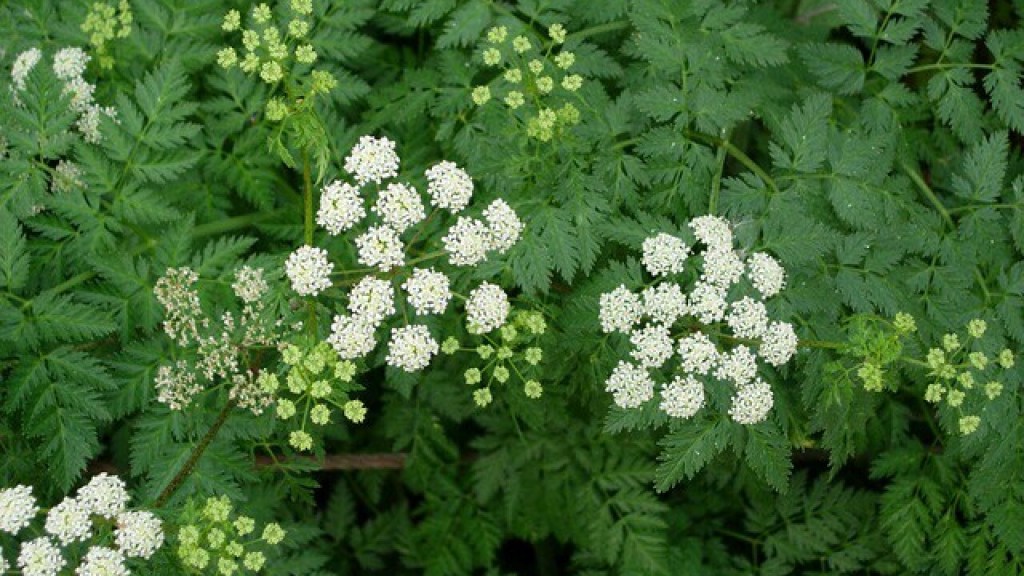
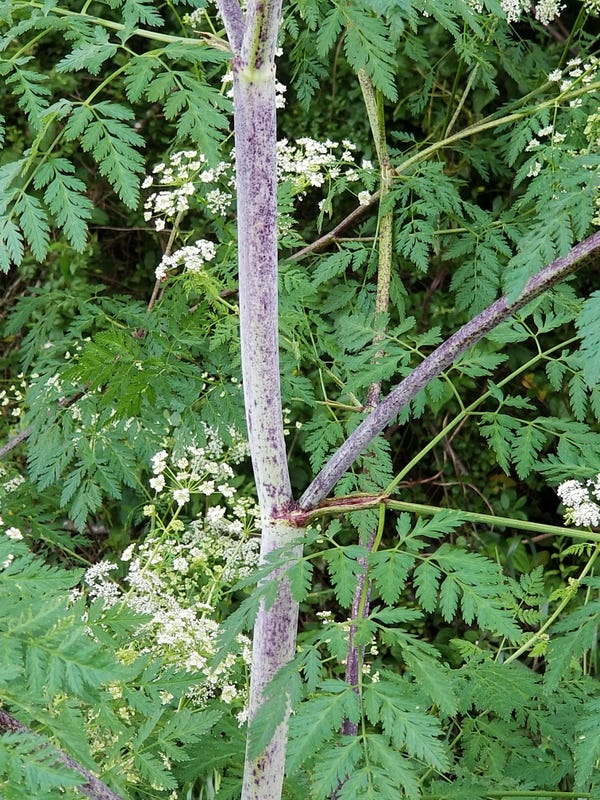
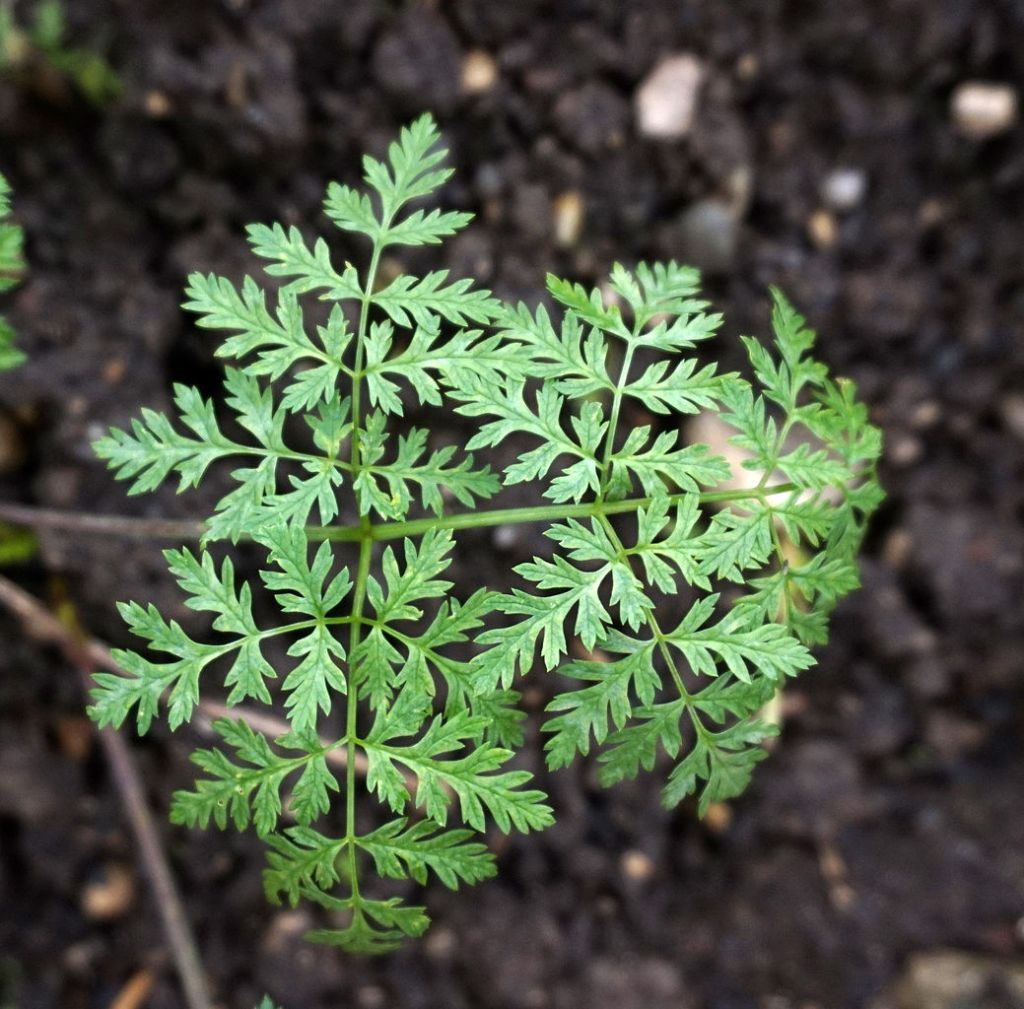
Poison Hemlock is a member of the carrot family. All parts of the plant are poisonous to both animals and humans. You can see the new growth in the early spring. Seeds fall between September and February and germinate in the spring, although it typically doesn’t flower until their second spring. The leaves are fernlike in their appearance and it produces small white flowers in umbrella-shaped clusters. Hollow stems with purple streaks or splotches (pictured below) can grow from 2 to 10 feet tall. The fruit is egg-shaped in outline, with distinctive wavy ribs on the surface. It is composed of two dry halves, each with one seed, that eventually separate from each other.
History
The plant is native to Europe, North Africa, and Asia. It was introduced to the US in the 1800s as a “winter fern”. From there, it became an invasive species. It grows in moist shady places (supposedly), along ditches and fencelines, and sometimes in fields. Ours is growing in a full-sun area in well-drained soil, so not really sure that it’s super picky about where it grows.

Eradication
Poison Hemlock is one of the harder plants to eradicate, even using herbicides (which we don’t encourage here on the Farm). The best method to remove it is to pull the plant by hand before it flowers. Burn the pulled plants to ensure that animals do not eat them after being pulled.
You can also repeatedly mow the area down but it is recommended by the USDA to then treat the plants with herbicides in the Autumn. Another option is to reseed the area with native plants that will compete and smother the Poison Hemlock. Keep in mind that with any option that you choose, it is likely to take 3 to 6 years to remove the plant entirely due to the latent seed bank in the soil from past years.
Also, keep in mind that any machinery used to mow, spray, or till the area needs to be thoroughly cleaned to remove seeds so that they are not spread to other areas.
Signs of Poisoning
Handling the plant for some humans can cause a rash on the skin. Use gloves when handling. If you believe that an animal has ingested Poison Hemlock, look for nausea, vomiting, convulsions, loss of muscle power, dilation of pupils, slowing of heartbeat, and eventually death of respiratory failure. Usually, death occurs within 2 to 3 hours of ingestion.
Treatment
Treat Hemlock Poisoning as you would nicotine poisoning, using tannic acid followed by a purgative. Try to keep animals calm as stress can move the poison through their system faster.
Further Research
- USDA – Field Guide for Managing Poison Hemlock in the Southwest
- Cal-IPC – IPCW Plant Report – California Invasive Plant Council
- US Park Service – Exotic Species: Poison Hemlock
Don’t Get Left in the Weeds!
While we’re on the topic of intriguing plants, how about keeping up with all the green (and not-so-green) happenings at Huckleberry Farms? From mysterious plants to bustling barnyard updates, our farm is teeming with tales you won’t want to miss. Dodge the risk of FOMO and follow us on Facebook and Instagram. We promise to plant seeds of knowledge, sprout some giggles, and cultivate a sense of community, all just a click away. Dive in and let’s grow together! 🌱🐓📲
