
When folks think of farm animals, rabbits aren’t usually one animal they think of. They think of cattle, hogs, horses, maybe goats or chickens, or ducks. But here on Huckleberry Farm, one of our main types of farm animal are rabbits.
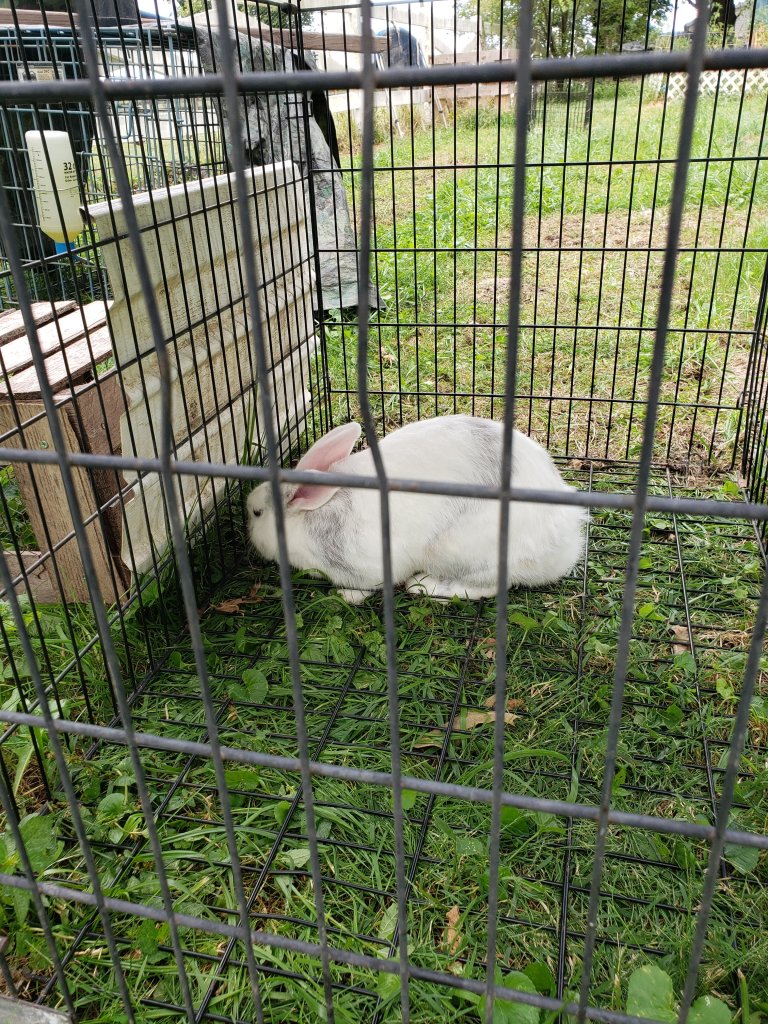
We don’t use chemicals to control the vegetation growth along fencelines here. We utilize a natural way of controlling them – rabbits! Using metal dog crates, we house a full-grown rabbit and move the cage along the fence line, allowing the rabbit to eat the vegetation while also providing ready-to-use fertilizer for the ground.
Using this method, we remove the need for chemical sprays, reduce the need for commercial feed and mowing, and we provide meat that tastes more natural since the animal is on a natural diet of varied greens just like a wild rabbit. The manure from the rabbits also provides fertilizer for the ground as the rabbit is moved so it doesn’t overload just one area with nutrients and creates an environment that fosters healthier vegetation for the next pass of the rabbit mower or for any other livestock that is then run in that area.

“Rabbit manure contains four times the amount of nutrients compared to cow or horse manure and twice the nutrients compared to chicken. An average rabbit would produce 200–300 poop pellets per day and 120–130 ml/kg of urine per day.” (1)
While a single rabbit can not ever hope to compete with the grazing power of sheep or horses or cattle, even one can be used along fence lines. We currently have 2 working the fencelines while 3 more are working through various sections of our pasture. We also put an old chicken coop to use as a grow-out pen for our babies to give them an area to continue to socialize and also to begin transitioning to mower rabbits.
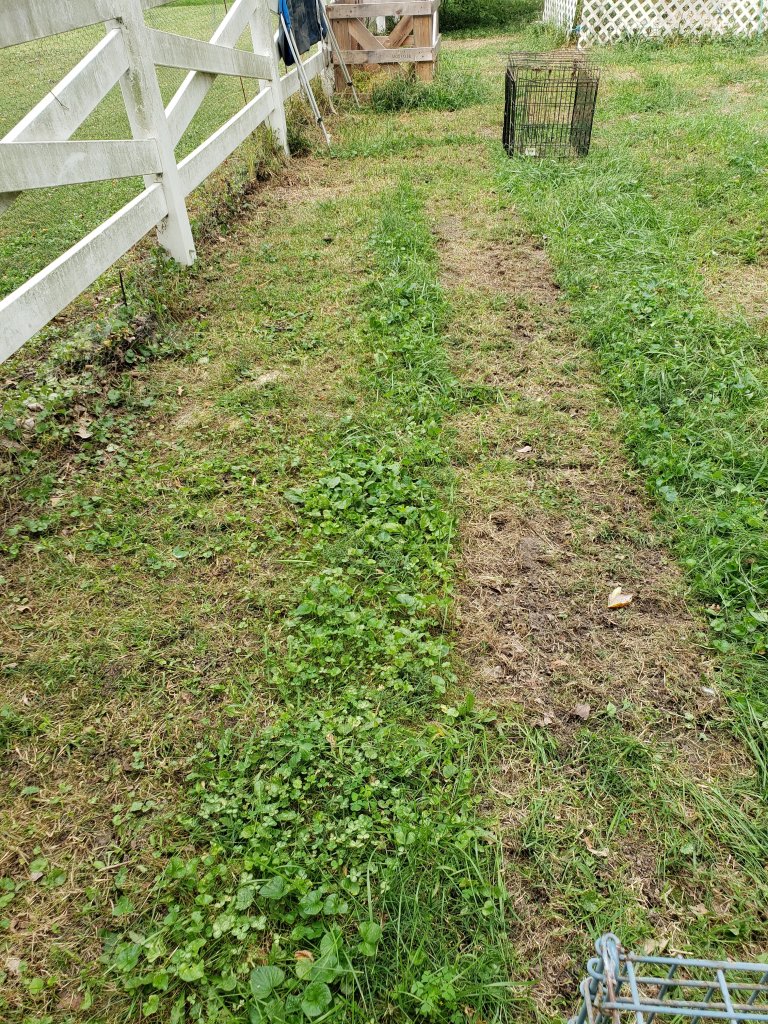
Rabbits left too long in one area can become damaging once they’ve eaten all of the grass. We have 2 that will begin to dig when they run out of grass and one that has figured out that if she’s in a cage with a large enough hole in the bottom that she can dig her way to freedom. So some of our cages have been flipped upside down so the small holes are on the bottom and the sunblock, be it a cage tray, a tarp, a piece of plywood, etc, then covers the large holes on the top so they can’t escape that way. I did make use of the diggers when getting the garden ready for this winter by allowing them to dig in the garden and turn the dirt.
You won’t find much that we do “traditionally” here at Huckleberry Farms. But as long as it works hand in hand with nature and creates a better life for our animals, that’s all that matters.
If you have any questions, feel free to comment below!
If you haven’t already, be sure to check out our NEW Facebook Page Huckleberry Farms! Get daily posts about the goings on at the farm, funny memes, and information bites that can help you with your homestead journey!
