Chicken is chicken is chicken, right?
Wrong.
We’ve all heard that old adage “you are what you eat.” This is very true. Something else that is true is that “You are what your food eats.”
Commercial Free Range Chickens
“Free-range” is a popular choice among chicken buying experts. According to the USDA’s Food Safety and Inspection Service, chicken can be labeled as “free-range” if the producer can prove to the USDA that the chickens have been given access to the outdoors. In some cases, this can mean access only through a “pop hole,” with no full-body access to the outdoors and no minimum space requirement.

Humane Farm Animal Care (HFAC) has their own set of Free Range requirements. HFAC’s Certified Humane® “Free Range” requirement is 2 sq. ft. per bird. (Roughly 2 pieces of notebook paper.) The birds must be outdoors, weather permitting (in some areas of the country, seasonal), and when they are outdoors they must be outdoors for at least 6 hours per day. All other standards must be met.
These free range chickens barely have access to fresh grass and bugs, so the majority of their diet is processed feeds, grains, etc. A study was completed in 2017 that looked at the consequences of eating chicken daily that had been raised on commercial feed vs organic chicken over a 6 week period. At the end of that time, they tested the % growth rate, serum cholesterol, progesterone, testosterone and estrogen levels in the female rats. The study found that there was a “significant increase in growth rate, serum cholesterol levels and imbalance in serum steroidal hormone levels”. It was determined that the intake of commercial chicken feed and commercial chicken meat may be the potential cause of development of polycystic ovary syndrome (PCOS) in females due to steroid hormonal imbalance.
Commercial Pasture Raised
The other oft talked about option is “pasture raised” chicken. When I hear this, I envision a set up kinda like the cattle pastures I saw around where I grew up. 50 to 100 head in a field that spanned a few acres.
Unfortunately, this is not the reality for commercial pasture chicken operations. HFAC’s Certified Humane® “Pasture Raised” requirement is 1000 birds per 2.5 acres (108 sq. ft. per bird) and the fields must be rotated. The hens must be outdoors year-round, with mobile or fixed housing where the hens can go inside at night to protect themselves from predators, or for up to two weeks out of the year, due only to very inclement weather. All additional standards must be met.
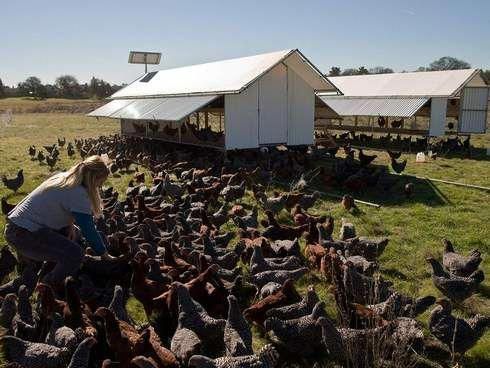
This is very visibly the better of the two options if store bought is the only option you have for buying chicken. Pasture raised poultry will likely have more exposure to fresh air, fresh grass, bugs, lower stress levels, and lower amounts of processed feeds. Overall, this would make for healthier birds, healthier meat, and a healthier food option for you.
If you can find a small farm that does pasture raised chickens, you will find an even better quality bird than commercially pastured chickens.
Farm Raised Chicken
For those of you who have access to true farm raised chicken, like what we offer here at Huckleberry Farms, there is a third option. Farm raised chickens have the ultimate access to fresh air, grass, bugs, and freedom. Our birds have roughly 1/2 an acre to roam around on. They spend their days catching bugs, dust bathing, eating grasses, flapping their wings at each other, and following the humans around like little puppies.
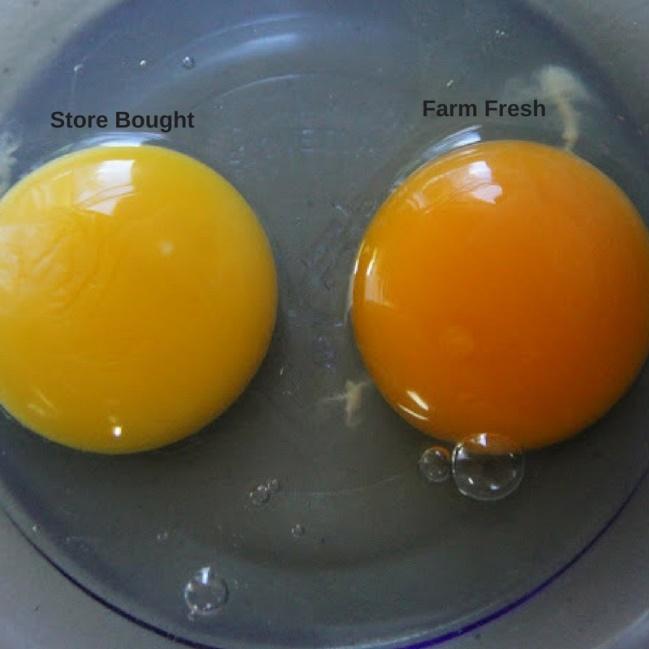
Having a low stress environment like this allows the chickens to be relaxed, with less cortisol and stress hormones being released by their systems leading to meat that is more tender. Being able to forage and get a balanced diet of bugs and grass leads to eggs with a darker yolk and both eggs and meat with higher nutrition.
One of the healthiest things about chicken that has been allowed to forage is its high protein content. Just one forager chicken breast can supply around 52 percent of most people’s daily protein needs. I don’t know about you, but I like being able to eat less and gain more nutrients. Especially since I am borderline diabetic and protein helps keep my sugar levels in check.
According to one study conducted in 2007, free-range eggs are a much healthier choice in a lot of specific ways. This study showed that compared to eggs from battery-caged hens, eggs from free-range hens contained: (1)
- ⅓ less cholesterol
- ¼ less saturated fat
- ⅔ more vitamin A
- 2 times more omega-3
- 3 times more vitamin E
- 7 times more beta-carotene
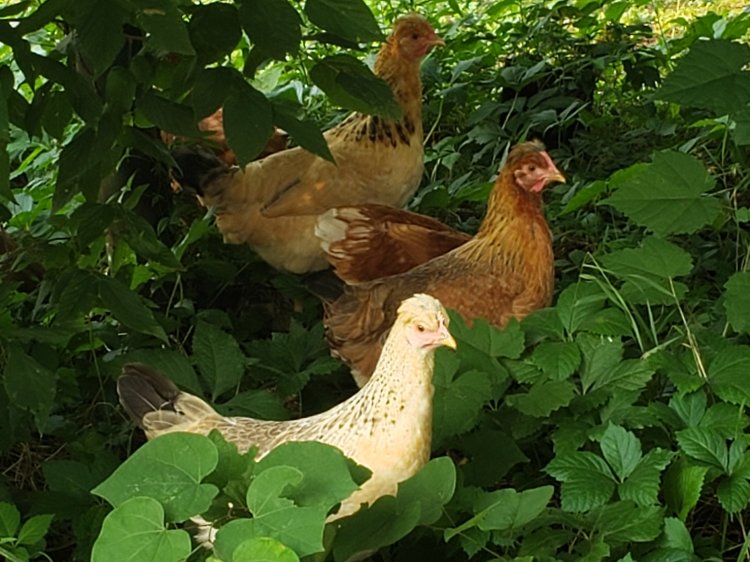
Another benefit to chickens being allowed to forage is that the exercise helps to build their muscle, which results in better tasting meat than those raised in artificial confined areas. This makes sense, as I’ve stated before, the chickens that are allowed to forage and do what chickens do are less stressed with a better diet.
In 2013, Consumer Reports conducted some highly revealing testing of chicken meat. It purchased 316 raw chicken breasts from various retailers around the country and found that a whopping 97 percent contained potentially harmful bacteria, including Salmonella, Campylobacter, Staphylococcus aureus and Enterococcus. Approximately half of the chicken tested also contained at least one bacterium resistant to three or more antibiotics, which means it is a multidrug-resistant bacteria or “superbug.” In addition, over 11 percent contained two or more of these superbugs! (2)
Our Birds
One of the things that got me interested in homesteading to begin with were the cute little baby chicks at the farm store. I wanted to learn everything I could about them once I brought them home and this inevitably led to learning about commercial chicken farming operations. Do a quick Google search for Tyson Commercial Chicken Farming and you will get a very clear understanding of why I chose to go the most natural route possible here at Huckleberry Farms.
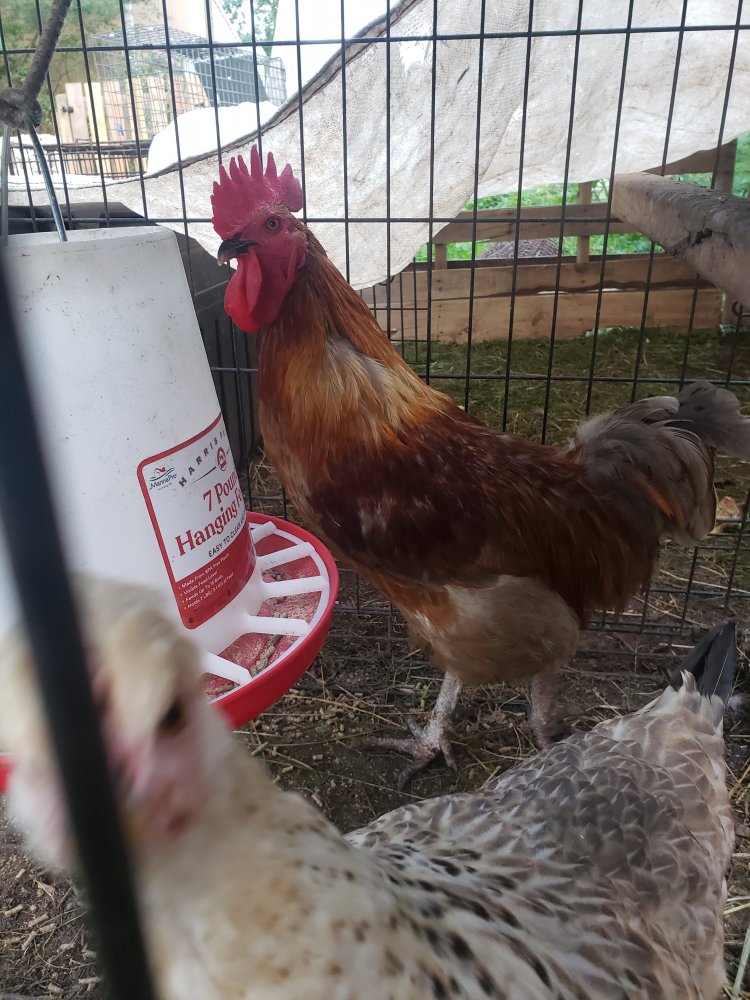
We still feed a small amount of commercial feed. The birds have access to a feeder in their pen at all times. When they are foraging during the day, I usually only add enough for overnight in case they want some before bed or before we let them out in the mornings. During the day, the feeder is frequently empty. For times when inclement weather keeps them from being out or other such circumstances where they are not able to be out (very rare, even in cold weather), I will fill the feeder up so that they can eat their fill through the day.
That being said, the commercial feed makes up a very small percentage of their diet. Even when they are stuck in the pen, we take them lots of treats such as watermelon, cantaloupe, worms, soldier fly larvae, carrot tops, strawberries, bread in small doses, tuna, hamburger meat, and any other goodies we can come up with. I have even been known to go out and forage greens for them while I was foraging herbs for the rabbits just to keep everybody happy and healthy. When given other options, they rarely choose the commercial feed.
Conclusion
When you have a choice to choose between “free-range” and “pastured” at the store, always go for the “pastured”. If you want for sure great tasting, looking, and nutritious eggs and meat, hit up your local farms and shops! For more of our homesteading adventures and information on farm foods, check out the rest of Huckleberry Farms!
If you haven’t already, be sure to check out our NEW Facebook Page Huckleberry Farms! Get daily posts about the goings on at the farm, funny memes, and information bites that can help you with your homestead journey!
